As often as we’re asked how long do you feed a dog puppy food, it’s quite remarkable how many people are genuinely worried about moving their puppy to adult food either too soon or too late.
You should feed a puppy on puppy food while they’re younger than 12-months, but the transition process can start earlier.
Your dog is a puppy for as long as you want them to be. Nobody is going to tell you different. But in the interests of answering this specific question of how long do you feed a dog puppy food the appropriate time to stop feeding puppy specific food is no later than 12-months old.
Why?
Because in purely simplistic terms, at 12-months old your puppy is technically an adult.
Let’s break down the puppy to adult dog process.
As you can see, puppy growth stages can seem like a flash before our eyes.
Puppy development – the baby to the teenager to the adult dog
Puppy (young)
Adorable. Surprisingly obedient. Love to be around you. Often bolder than you’d expect. Sleeps a lot.
Puppy (16 weeks)
Personality developing. More cautious about certain scenarios. A little more mischievous. Willing to explore more. Sleeps a lot.
Puppy (6 months)
A little less obedient. High energy. Sleeps far less. More interested in food. More demanding and in pursuit of mental stimulation.
Puppy (6 months to 12 months)
Personality shining through like a beacon. Sometimes obedient, sometimes wilfully challenges instructions that you know for certain the pup understands.
Physically very active, but prone to exhausting themselves quickly in short bursts.
At 12-months old your dog’s needs are different, particularly their nutritional requirements.
Summary: How long do you feed a dog puppy food
With all this info in mind, it’s important to recognise the different energy levels of an young adult dog vs the different calorie needs of a growing puppy.
Puppy foods are designed specifically to help them grow.
Adult dog foods are designed to help an adult maintain and thrive.
If you’d like to learn more about the dog growth stages, from puppy to adult – download this free eBook
Free Book (useful for all dog owners)
If you’d like to learn more about dog growth stages, from puppy to adult – download this free eBook
Learn Your Dog’s REAL Age
Many people think they know their dog’s true age. But they’re wrong. Find out how old your dog REALLY is:
Remember the pet food you give to your puppy should be based on various factors.
Nowadays there are foods for large breeds, toy breeds and various breed specific foods.
Always feed your puppy with the highest quality food you can afford. You never get the chance to have that vital first 12 months of your dog’s development back again.
Switch from puppy food to adult dog food at or before 12-months old
A puppy’s mother s milk helps them develop for the first weeks of their lives, after that it’s entirely down to us!
High quality dog food isn’t always the most expensive dog food (do research for reviews)
At 12- months of age your puppy is technically an adult dog
Puppies grow fast. Really fast.
Your puppy may reach maturity (physically) many years earlier than they reach maturity mentally
Feed your dog based on their age, breed type and lifestyle at all times – factoring whether they’re a small, medium or large breed
Keep a close eye on body condition throughout your dog’s life
Develop a strong relationship with your vet. Yes, vet bills can be expensive – but the more often your vet sees your dog, the better they’ll get to know them. If your vet sees your dog for regular checkups, your vet bills will be lower in the long run
Dog nutrition experts views on when to switch from puppy to adult dog food
Both small and medium breed puppies are considered adult at about one year of age, so your dog’s birthday indicates when to switch from puppy food.
In terms of a puppy’s diet, puppy food generally contains more protein content than adult dog food in order to sustain this new growth at a faster rate.
Why transition from puppy food to adult dog food? When your puppy is growing, he needs more nutrients and calories than an adult dog, which is why puppy foods have higher levels of protein and fat to support growth, as well as nutrients like DHA, an omega fatty acid found in mother’s milk.
When should I switch from puppy food to adult dog food? Once puppies have reached 90% of their expected adult weight, they should switch from a growth diet to one that’s suitable for maintenance.
If you have a large breed dog, talk to your vet first, as they may recommend keeping them on their puppy food a few months longer to ensure they get the proper calories to grow to their full adult form.
Making the transition from puppy to adult food at an appropriate time is important because there is a major shift in regards to the caloric needs and nutrition requirements of your puppy as she approaches maturity.
When Should You Make the Switch? There are a number of “rules†out there regarding when to make the switch from puppy food to adult dog food, and recommendations vary depending on your dog’s breed size.
Rich puppy food can quickly lead to excessive weight gain for adult dogs, so the transition is important.
switching from puppy food to adult food, how long do you feed a dog puppy food Puppies of any size or shape are just about guaranteed to be adorable.
switching from puppy food to adult food, how long do you feed a dog puppy food Nutrition / Pet Diet Tips.
Since obesity is the most common nutrition-based issue for canines, it’s crucial adult dogs no longer eat puppy food, which can also cause orthopedic problems in older dogs.
Spaying or neutering usually occurs at this age as well, lowering your dog’s need for increased energy; hence a reason to switch from puppy to adult dog food.
The transition from puppy food to adult food is an important time in your dog’s life.
When it’s time to stop feeding puppy food, you want to transition to adult dog food gradually.
switching from puppy food to adult food, how long do you feed a dog puppy food Nutrition & Feeding.
Puppy food should also be higher in calories than adult food to compensate for the energy puppies expend by growing and playing.
switching from puppy food to adult food, how long do you feed a dog puppy food Compare Breeds Compare up to 5 different breeds side by side.
Puppy food is very high in calories and nutritional supplements so you want to switch to adult food once your puppy begins to approach maturity.
switching from puppy food to adult food, how long do you feed a dog puppy food Unfortunately, there’s no set answer for when to stop feeding puppy food.
As a general rule, dogs that are less than one year of age are considered puppies, and it is important during that year that they are being fed puppy formula pet food.
Our experts can help you determine when it’s time to make the switch from puppy food to adult dog food.
switching from puppy food to adult food, how long do you feed a dog puppy food When to Switch to Adult Dog Food.
If your dog starts skipping meals or picking at food he would otherwise devour, it might mean he’s ready to switch from a puppy to an adult diet.
When making the switch to adult food, do it slowly over the course of one to two weeks by gradually mixing in increasing amounts of the adult food with decreasing amounts of her puppy food to minimize gastric upset.
So, the main difference between puppy food and adult food is in the protein and fat content, as well as the calorie density.
But if you have a puppy nearing one year of age, do you know when to switch to adult dog food? A veterinarian is always a good resource.
Mix a small amount of the adult food with your dog’s favorite puppy formula and slowly increase the amount over a week, while decreasing the puppy food.
After deciding it is time to switch your puppy to adult dog food, it’s time to consider how you will go about it.
In order to fuel your puppy’s healthy growth and development, you need to make sure that his nutritional needs are being met and the best way to do that is with a high-quality puppy food .
Continuing to feed puppy food past the point of maturity could result in weight gain, which can lead to other health problems.
switching from puppy food to adult food, how long do you feed a dog puppy food Your request has been blocked by one or more security restrictions.
switching from puppy food to adult food, how long do you feed a dog puppy food Your request has been blocked by one or more security restrictions.
But how do you know when to switch to an adult recipe and how do you make the transition? Unless you understand the difference between puppy food and adult dog food , you may not see why it is necessary to make the switch at all.
You should switch to an adult dog food when your puppy is anywhere from 18 months to 24 months old.
When switching from puppy food to adult food , you should make the switch gradually over a period of a few days.
When I got my very first puppy one of the first questions I needed to answer was, how much should I feed my dog? Now, having cared for many dogs and been involved in dog ownership for multiple decades, guess what – I still ask the same question, only slightly modified: how much should I feed this particular dog, right now.
Know your dog’s healthy, optimum weight
Novice dog owners and experienced dog owners will face this conundrum on a regular basis.
The answer is, you feed your dog according to the following rules:
It seems not many a day goes by where we’re not hearing more about the rise and rise of obesity. Sadly, our pets are also widening around the girth.
It is of course easy to control the amount of food your dog is eating and it is essential that you gauge your dog’s weight on a regular basis to ensure that it doesn’t get obese.
Health problems from overfeeding dogs
There are an increasing number of dogs suffering from this disease and in most cases this could have been avoided through the correct nutrition and monitoring the amount of food the dog has been eating.
Having a dog with diabetes will necessitate the injection of insulin or in some cases taking of pills to assist in the maintenance of the correct sugar levels in their blood.
Obviously this involves additional expense and inconvenience and there is also a danger that should the insulin level be incorrect your pet could die. All of this from simply giving them too much food? You bet!
Dog feeding guidelines: how much food should me dog be eating?
It makes sense then that your dog should only eat what is good for it and in quantities that won’t result in it developing health problems later in life.
“feeding guidelines on dog food packaging are extremely useful but should serve as a starting point only when assessing the right amount of food in your dog’s daily diet.”
Working dogs will need more food for the energy that they will expend in the course of the day but a dog that lays around the house all day and doesn’t get any exercise will not need to eat the same portions of food.
You should weigh your dog on a regular basis and see whether it is gaining or losing weight and adjust the amount of food it is eating accordingly.
You know, it’s quite incredible the amount of people who have literally no idea how much their dog weighs or indeed any idea of how much they should weigh. Simply getting to grips with this information can literally extend your dog’s life, in some cases for a considerable amount of time.
Many experts argue that there has been a general decline in the general health of dogs that correlates with the widespread introduction of certain types of processed dog foods.
Many of these low quality dog foods offer very little nutritional value but it is their convenience and the fact that they have added flavours that ensure our pets get delight in eating them that have increased the sales and popularity of this food. Understanding your dog’s specific nutritional requirements, again, can add years to their life.
Free dog weight chart
Bad diets for dogs have tragic consequences
Just as we might like to eat foods that contain sugar, which is detrimental to our health, our dogs also like to eat these low value foods because they taste so good – in many cases, with dogs being such scavengers, they’ll simply beg for ANY food that’s potentially on offer. It is entirely in our control not to harm their health by giving in to their longing expressions! So if you’re wondering how much should I feed my dog of sugary snacks…the answer is (if possible) zero!
Can I feed my dog table scraps?
If our diet is bad, often our dog’s is too. Don’t believe me?
A study by K9 Magazine showed that 98% of dog owners had fed their pets with scraps from their own tables at one time or another.
Dogs can eat table scraps, of course, but it’s a simple formula to calculate that if our own diet is not healthy and we’re sharing that with our dogs then – our bad food = dogs sharing in our own poor diet!
But therein lies another problem with many of the foods that we eat, unsuitable for dog consumption.
Many people are finding good results in preparing their own dog food using only those ingredients that will enhance the health of the dog but don’t discount the range of high quality diets that are available in prepared form. Don’t for a second assume they’re all bad because nothing could be further from the truth.
Good quality dog nutrition is available in the form of commercially prepared foods, canned dog food, raw dog food and even tailor-made dog food. The quality isn’t the main issue here if you’re asking yourself how much should I feed my dog, but over (or under) feeding will have a detrimental effect on your dog in multiple ways. It can and most likely will lead to them having a shorter lifespan.
What the experts say about how much you should feed your dog:
Here we’ve summarised a series of tips from credible dog nutrition sources to help you answer the question how much should I feed my dog:
Naturally, smaller dogs need less food than larger ones, but what exactly is the perfect number? First, it’s important to have an accurate handle on how much your dog weighs and whether their body size is considered small, medium, or large.
Young pups and senior dogs have very different needs – puppies need food for their growing bodies while adult dogs’ diets should be focused on maintaining their health.
One of the best ways to keep dogs healthy is to feed them the right amount of a high-quality dog food. Feeding a lot more of a low quality food doesn’t compensate for nutritional deficiencies.
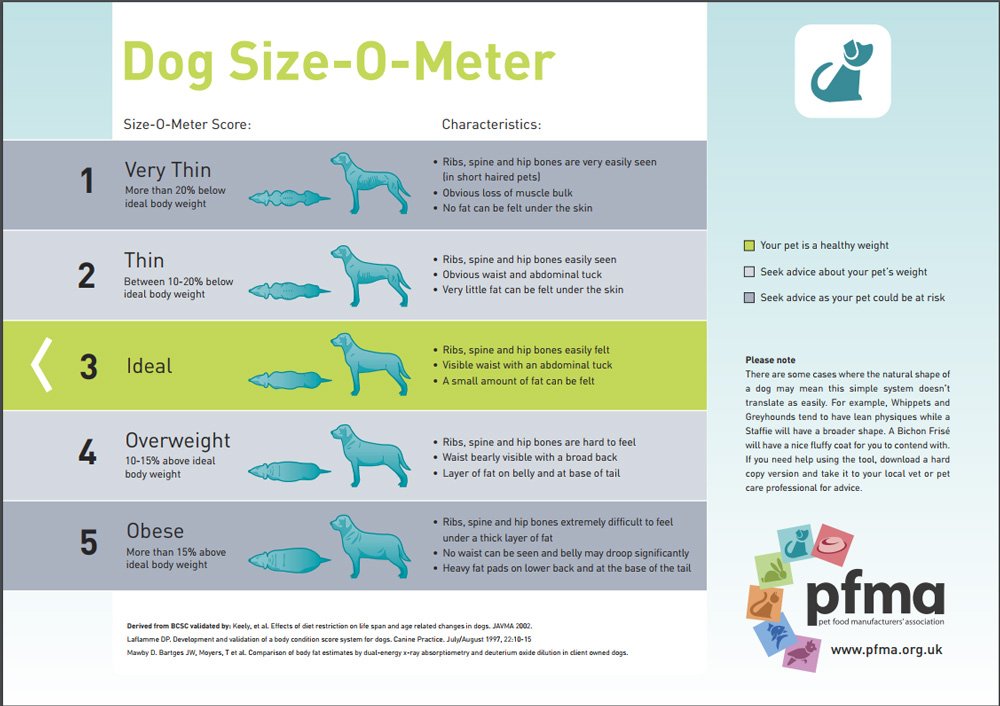
For more on diagnosing an overweight dog, see this dog weight chart.
If you are feeding a different brand, please consult the calorie information on-pack and adjust the amount of food accordingly to meet your dog’s recommended daily calories. Many people make the mistake of switching dog food brands and assuming they can feed the same volume of dog food. That can have big consequences.
To determine how much food to feed your dog, you should start by knowing your dog’s estimated adult weight. Weighing your dog is the key to knowing how much to feed them.
The value of feeding your dog a high-quality food is huge. Poor quality foods produce more waste, can cause digestive problems and often end up being more expensive (because to satisfy your dog you will need to feed him comparatively more).
If you have an adult dog that maintains normal activity levels and doesn’t need special nutrition, check out pet food company Purina’s Dog Chow guide below to see how much food to feed your dog.
It is also not ideal to feed your dog cat food as, since it is designed for cats, it doesn’t have the right balance of vitamins and minerals for dogs.
A healthy feeding schedule and diet will ensure your dog is getting all of the proper nutrients they need from their food. (see: how often should I feed my dog?)
It’s not just a matter of food quantity, so another question is, “How many calories should my dog eat?†There is a dog feeding calculator by weight available in the links below if you’re wondering exactly how much I should feed my dog.
If you are using a commercial dog food, feed your dog the amount printed on the bag that fits with your dog’s ideal weight. This is so, so important. (see how to read dog food labels)
Since puppies are growing rapidly, they need more food than adult dogs in some cases (whacky, but true)
Not all dogs can or need to eat the amount recommended by the food manufacturers. Speak with your vet if your dog is following the manufacturers guidelines but is either gaining or losing weight.
Does the amount to be fed in the feeding guidelines pertain to each meal or the daily amount of how much I should feed my dog? How accurate are the feeding guidelines on my dog food label? The manufacturers’ recommended feeding guidelines are a starting point but your dog is your dog, so you’ll need to adjust accordingly.
Too little food each day can cause dogs to be deficient in vital nutrients that help keep dogs healthy.
Puppies need a high-energy food and because they are growing so fast they’ll require a food with more protein and calcium to help build a healthy adult dog, and more calorie-heavy fats to load them up with fuel.
Dogs that gulp their food down too quickly tend to take in large amounts of air whilst eating which can cause stomach and digestive system upset. (beware the dangers of bloat in dogs)
Even though puppies grow quickly, it’s important to keep caloric intake and food amount consistent from four to twelve months of age.
Older dogs usually require lower caloric intake and may get heavy eating the same food they were eating in their younger years.
Most adult dogs should eat two meals a day, and puppies often require three or more feedings, so you’ll need to divide the amount in the table by the number of meals you are offering.