Tag: puppy farms

  • Recognition for Kat Thorburn Who Helped Smash Sick Puppy Farm Ring

    Recognition for Kat Thorburn Who Helped Smash Sick Puppy Farm Ring

    An undercover officer from the RSPCA has been presented with an award for her incredible work smashing a ring making £35,000 selling sick and dying puppies.

    For more than 100 years, the RSPCA Honours have been given to recognise people and organisations who’ve helped us in our goal to end cruelty, protect animals from abuse and further our knowledge of animal welfare.

    Inspector Kat Thorburn, part of the RSPCA’s special operations unit, was presented with the David Millard award for her work investigating a puppy ring in Greater Manchester which duped people into buying dogs which they claimed were home bred with pedigree papers.

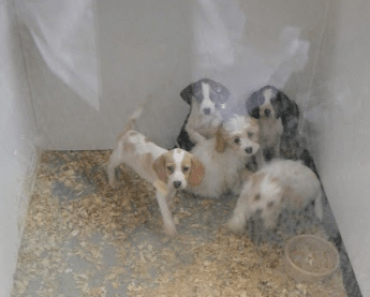
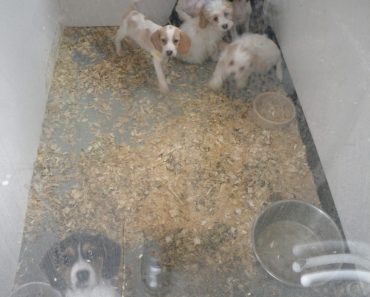
    In fact thousands of puppies were bred by large scale breeders in Ireland and Eastern Europe and shipped to England for sale. Many of them were ill and some sadly died within hours or days of being bought by their new owners.

    RSPCA Chief Executive Jeremy Cooper said: “We are incredibly proud of Kat Thorburn and the team who pioneered a new way to investigate organised gangs of criminals who are making thousands of pounds trading in sick and dying puppies.

    “Thanks to the hard work, determination and tenacious attitude of Kat who drove this investigation we’ve sent a clear message out to irresponsible puppy traders that they will be held accountable.

    “Kat’s work has also helped us raise vital awareness of our campaign to #ScrapThePuppyTrade calling for tougher regulation around the selling of dogs which has been supported by more than 60,000 people.”

    Previous attempts to investigate had stalled because of the difficulty of proving the the dogs were suffering when they were in the hands of the sellers.

    So Inspector Thorburn took on the huge task of collating dozens of complaints, tracking down a large number people who had bought puppies and taking witness statements from them.

    The damning statements, together with surveillance of gang members provided enough suspicion for magistrates to grant a warrant allowing police and RSPCA Officers to raid premises linked to the puppy selling ring.

    The raids on several different properties revealed vital evidence of a very sophisticated organised fraud. The gang rented several houses so buyers thought they were getting a puppy bred in a loving family homes.

    If buyers asked to see the puppy’s mother they were told she was on a walk or at the vets. The gang had several of mobile phones labelled with different breeds of dogs so they knew what dogs to talk about if people rang in response to adverts.

    They faked glossy packs with bogus pedigree papers and other documents to fool unsuspecting buyers who thought they were dealing with a responsible breeder. They even gave out free insurance with each puppy along with veterinary first vaccination cards to try and give the puppies validity.

    Thanks to Inspector Thorburn’s thorough investigation and determination more than 180 puppies were seized from the gang and there were a series of court cases where members of the ring were jailed and banned from keeping animals.

    Kat said: “I sat in so many people’s front room while they were devastated and crying and telling me how they were tricked into buying sick and dying puppies.

    “These were not stupid, gullible members of the public. These were everyday normal people like you and I, including police officers, teachers, professional, hard working people who had been conned out of hundreds of pounds by an organised gang of criminals who had absolutely no regard for the puppies they were trading or the people they were selling them to.

    “This gang knew they were selling sick puppies, some of which had deadly diseases. Some of the diseases were zoonotic which means they can spread to their owners, but they just didn’t care. All they cared about was making as much money as possible.

    “These cases took over my entire workload for a long time as it was extremely time consuming. I was horrified by what we discovered, dead puppies in the footwell of a car, one in the boot of another, thrown in the wheeley bin like rubbish and even one dead puppy in a crate along with a live one standing over it.

    “I dread to think about the awful conditions the mothers of these puppies are being kept in somewhere, they are producing litter after litter of poor quality, unhealthy puppies which are carrying all of these highly contagious parasites, diseases and bacteria. Let alone the risk of other diseases such as rabies.

    “It had been very difficult for us to prosecute puppy dealers previously but this new approach has worked and can hopefully be used to tackle more of these unscrupulous dealers in future.”

    The David Millard award for special investigations is given in memory of the North of England’s regional superintendent who passed away in in September 2009, aged 61, after almost 37 years with the society.

    The RSPCA Honours ceremony was held on Saturday 18 June at The Law Society in London which was especially appropriate as 2016 marks the 10th anniversary of the Animal Welfare Act. Since it’s introduction the RSPCA has helped more than 150,000 cats and dogs.

    This year 19 people who had gone the extra mile for animals were awarded with RSPCA Honours including:

    Two men who saved a much-loved cat from a house fire

    A police officer who worked tirelessly to save 33 dogs from squalid conditions

    An American woman who has improved the lives of millions of farm animals with an assurance scheme

    An undercover RSPCA inspector who helped crack an illegal puppy selling ring making £35,000-a-week

  • Cruel Puppy Farm Pair Guilty of Multiple Counts of Animal Welfare Abuse

    Cruel Puppy Farm Pair Guilty of Multiple Counts of Animal Welfare Abuse

    A pair of animal traffickers have each pleaded guilty to 10 offences in relation to selling dogs and cats from their home in Manchester.

    Laura Kiseliova (DoB: 14/06/79) and Raimondas Titas (DoB: 13/03/81) appeared at Manchester Crown Court this week for the start of a three-week trial. But, on Thursday (2 June), the pair pleaded guilty to a total of 10 offences each, under the Animal Welfare Act 2006, the Fraud Act 2006, the Pet Animals Act 1951 and the Companies Act 2006.

    https://i.imgur.com/ypAnwBI.jpg
    File photo

    The RSPCA launched an investigation into the pair, who were trafficking dogs into England from eastern Europe and selling them to unsuspecting members of the public.

    Kiseliova was released on conditional bail and Titas was remanded in custody by the court to establish his correct address.

    RSPCA special operations unit chief inspector Ian Briggs said: “When we attended the property in Prestwich on 18 November 2013 we found 41 dogs and puppies and eight cats in a variety of cages, crates and runs.

    “Many of the dogs were French bulldogs, bulldogs, and pugs, while there were also pedigree cat breeds.

    “It was obvious that this duo were dealing and trading in a large number of animals and that many of them were not receiving the appropriate care and veterinary attention they needed.

    “Some of the animals were suffering from problems such as conjunctivitis, gastroenteritis or had sore and infected wounds.

    “During our investigation, most of the animals were signed over into RSPCA care and later rehomed.”

    Kiseliova pleaded guilty to:

    Carrying on the business of Pets 313 Ltd for a fraudulent purpose, namely bringing dogs into the UK from Europe to sell them, misdescribed, at a profit – contrary to section 993(1) of the Companies Act 2006.

    Keeping a pet shop without a licence – contrary to section 1 of the Pet Animals Act 1951.

    Keeping a dog breeding establishment without a licence – contrary to section 1 of the Breeding of Dogs Act 1973.

    Causing unnecessary suffering to two dogs, by failing to provide proper and necessary veterinary care for hemorrhagic gastroenteritis – contrary to section 4(1) of the Animal Welfare Act 2006.

    Causing unnecessary suffering to two dogs, by failing to provide proper and necessary veterinary care for conjunctivitis – contrary to section 4(1) of the Animal Welfare Act 2006.

    Causing unnecessary suffering to one dog, by failing to provide proper and necessary veterinary care for infected wounds and painful limbs – contrary to section 4(1) of the Animal Welfare Act 2006.

    Causing unnecessary suffering to one dog, by failing to provide proper and necessary veterinary care for moist dermatitis – contrary to section 4(1) of the Animal Welfare Act 2006.

    Failing to ensure the needs of 41 dogs and eight cats were met by failing to protect them from pain, suffering injury, or disease by failing to establish a formal biosecurity and disease control programme – contrary to section 9 of the Animal Welfare Act 2006.

    Failing to ensure the needs of all animals were met by failing to protect them from pain, suffering injury, or disease by failing to establish a formal biosecurity and disease control programme – contrary to section 9 of the Animal Welfare Act 2006.

    Failing to ensure the needs of 22 dogs and eight cats were met by failing to provide a suitable environment – contrary to section 9 of the Animal Welfare Act 2006.

    Titas pleaded guilty to:

    Dishonestly and intending to make a gain for himself or another, made a representation to Petplan which was true or misleading, namely that he was the holder of a valid policy of insurance for a dog named Black Diamond and was entitled to make a claim – contrary to section 1 of the Fraud Act 2006.

    Carrying on the business of Pets 313 Ltd for a fraudulent purpose, namely bringing dogs into the UK from Europe to sell them, misdescribed, at a profit – contrary to section 993(1) of the Companies Act 2006.

    Keeping a dog breeding establishment without a licence – contrary to section 1 of the Breeding of Dogs Act 1973.

    Causing unnecessary suffering to two dogs, by failing to provide proper and necessary veterinary care for hemorrhagic gastroenteritis – contrary to section 4(1) of the Animal Welfare Act 2006.

    Causing unnecessary suffering to two dogs, by failing to provide proper and necessary veterinary care for conjunctivitis – contrary to section 4(1) of the Animal Welfare Act 2006.

    Causing unnecessary suffering to one dog, by failing to provide proper and necessary veterinary care for infected wounds and painful limbs – contrary to section 4(1) of the Animal Welfare Act 2006.

    Causing unnecessary suffering to one dog, by failing to provide proper and necessary veterinary care for moist dermatitis – contrary to section 4(1) of the Animal Welfare Act 2006..

    Failing to ensure the needs of 41 dogs and eight cats were met by failing to protect them from pain, suffering injury, or disease by failing to establish a formal biosecurity and disease control programme – contrary to section 9 of the Animal Welfare Act 2006.

    Failing to ensure the needs of all animals, for which they were responsible between 12 April 2012 and 19 November 2013, were met by failing to protect them from pain, suffering injury, or disease by failing to establish a formal biosecurity and disease control programme – contrary to section 9 of the Animal Welfare Act 2006.

    Failing to ensure the needs of 22 dogs and eight cats were met by failing to provide a suitable environment – contrary to section 9 of the Animal Welfare Act 2006.

    Kiseliova and Titas are due back at Manchester Crown Court on 8 July for sentencing

  • Astonishing 122% Increase in Puppy Farm Complaints

    Astonishing 122% Increase in Puppy Farm Complaints

    The number of calls about puppy farms received by the RSPCA have more than doubled over the last five years, according to statistics released today. (04/12/15).

    So far this year the animal welfare charity has received 3,232 calls – a 122% increase from five years ago.

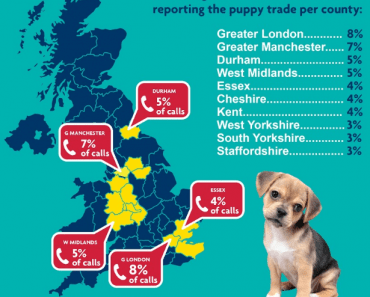
    These shocking figures mean that on average the RSPCA has received  more than one call about puppy farms and dealers every three hours – with Greater London coming top for the volume of calls.

    RSPCA assistant director of public affairs David Bowles said as the problem grows the need to bring in regulations surrounding the sale of puppies is all the more urgent.

    “These statistics just go to show the number of reports we receive are on the up just as the number of puppy farms and dealers increase.

    “For dealers – these puppies are easy money – we believe they buy them in from Ireland and the continent for around £100 and then sell them on the Internet for many hundreds, even thousands of pounds.

    “Dealers buy puppies in bulk looking for the highest profit margin. Often the puppies are too young to be away from their mothers and are sick when they are loaded onto vans, before travelling hundreds of miles which is likely to be incredibly stressful and could exacerbate any disease they already have. A lack of socialisation also increases their chances of long-term behavioural problems.

    “These people are gambling with the lives of not just these puppies – but the dogs they are bred from too and they are playing with the emotions of people and families who take them on as pets.

    “It is clear the present legislation is not working and that this sickening trade needs to be stopped.”

    In a bid to raise awareness about the puppy farming industry in the run up to Christmas the RSPCA has also released a run down of the country’s ‘hot spots’ when it comes to reports of puppy farming in 2014.

    Greater London racked up the highest number of calls (262) – followed closely by Greater Manchester (209).

    David Bowles said: “Puppy trafficking is big business and dealers are getting rich from duping members of the public and often leaving a trail of sick and dead puppies behind them, not to mention the heartache of families that have bought puppies.

    “If they’re lucky enough to be rescued, it can be really difficult for the puppies to cope in a home environment and it takes a lot of time, patience and hard-work from their new owners to help them settle in and become confident..

    “We want to see tougher regulations in place around the sale of puppies. In 2013 the UK Government brought in new laws to tackle the criminal scrap metal trade in England. But now it’s puppies who are being traded like scrap with no regard for their welfare, or even if they live or die.

    “It is far too easy to sell puppies and current laws are failing puppies and their parents. The RSPCA wants to see Westminster treat the issue of puppy dealing in England as seriously as they did scrap metal and license anyone who sells a puppy to help ensure traceability and put barriers in the way of dealers.

    “This would not stop illegal trading altogether but it would help to remove the huge layer of unregulated puppy dealing we’re currently battling on a daily basis. Local authorities would have the tools they need to act and improve protections for puppy buyers too. ”

    The RSPCA is now urging people to tell the UK Government that puppies are more precious than pieces of metal by signing our petition at www.rspca.org.uk/scrapthepuppytrade.

    You can also support the fight against puppy farming by joining the supporters of Puppy Love Campaigns.


    Have Your Say:

  • Going Undercover to Bring Down the Puppy Farmers

    Going Undercover to Bring Down the Puppy Farmers

    Undercover RSPCA Special Operations Unit inspector lifts the lid on what it is like to expose callous puppy dealers.

    “As a Special Operations Unit Inspector investigating the puppy trade comes as quite a challenge. The activity of selling puppies in itself is not illegal yet the volume of suffering puppies can be staggering.

    The first thing that becomes very apparent with some of the cases I’ve investigated is that these poor puppies are nothing but a commodity to the dealers.

    “The members of the public buying the dogs are nothing but a target, a cash cow, a means to an end. These dealers have forgotten you and your puppy before you walk out the door. Your story and the health of your puppy means nothing to them. Please do not be fooled into thinking it does.

    “Walking into the dealer’s premises has at times been quite impressive. The level of organisation required to achieve high turnover puppy sales is considerable. We have found large numbers of mobile phones with initials of dog breeds on the back. This system is so the dealers knows when the YT phone rings they need to talk about Yorkshire Terriers or the POM phone rings they talk about Pomeranians.

    “It takes a degree of skill to keep pulling the wool over buyers eyes all day everyday. From answering the phones when buyers respond to the fluffy adverts to arranging the sales with enough time allowed for each person to believe they have had a genuine experience and not bump into the next buyer on their way out.

    “The stories as to why the bitch can’t be viewed are plausible. The ‘pedigree’ papers are high quality glossy brochures with professionally printed embossed certificates.

    “To see such high volumes of very young puppies in the dealers kennels is just heartbreaking. All each puppy wants is to be cuddled, loved and feel safe like it did before being prematurely wrenched away from it’s mother. If only they could tell you of the traumatic journey they have already made in their short lives.

    “The cheapest puppies that make the highest profits come from Eastern Europe and Ireland. The disease risk associated with importing these puppies is very high. Not only to the dogs themselves but to the public of the UK. For example some of these puppies are brought in from Rabies endemic countries. Many carry zoonotic diseases such as Campylobacter and Giardia. Also skin conditions such mange and ringworm.

    “It feels good as an SOU Inspector to know that the RSPCA will now care for and do our very best to find each one a loving new home, but I can’t help but wish there wasn’t such a demand for these puppies in the first place.

    “It’s a bitter pill for an RSPCA inspector to swallow to know that our animal centres are bursting at the seams with unwanted dogs yet these organised criminals are literally bringing these puppies in by the bucket load and making thousands of pounds a week exploiting them and the British public.

    When taking witness statements from the buyers it is obvious that these puppies very quickly become more than just a pet, they became a member of their family.

    “When the puppy becomes ill or dies the buyers are left devastated. One of the most upsetting stories I heard was one of a five-year-old little boy finding his beloved first pet dying in a pool of its own blood only 24 hours after purchase. This little boy’s puppy died at the vets and he suffered night terrors as a result.

    “Not only have the buyers been conned out of hundreds of pounds when buying the puppy but they are often left with huge vets bills to pay, whether the puppy survives or not.

    “These buyers are not foolish. They are ordinary hard working people who genuinely wanted to give a dog a good home.

    “The well written adverts, the fake documentation and the façade of authenticity that these dealers create leads the buyers to believe they are purchasing a well breed, pedigree puppy from a loving UK home. They couldn’t be more wrong.”

    This RSPCA inspector’s identity has been concealed for their own security.

    The RSPCA is now launching the #ScrapThePuppyTrade campaign, calling on the UK government to introduce the ‘Puppy Dealers Act’ in England to stop the unscrupulous trade in puppies. The charity believes huge numbers of sick, under-age and dying puppies – sold to unsuspecting buyers for huge profits, and most likely costing the economy huge sums in untaxed income – are being trafficked into the UK each year.

    Please visit www.rspca.org.uk/scrapthepuppytrade to sign the petition and show your support.

  • Puppies Not as Important as Scrap Metal According to the Law

    Puppies Not as Important as Scrap Metal According to the Law

    RSPCA launches #ScrapThePuppyTrade campaign to bring in laws to protect puppies from callous and cruel puppy dealers.

    The RSPCA has today issued a call for the UK govt to act more decisively in preventing the sick trade of puppy farming. The charity says:

    Puppies are being treated worse than scrap metal, according to the RSPCA which today launched a petition calling on the UK Government to clamp down on people selling sick dogs in England.

    Due to its low cost, low risk and high yield appeal, puppy dealing is an attractive option for people willing to make money at the expense of puppies’ health and welfare and the heartache of families up and down the country.

    puppy photo

    The charity says that more laws exist to regulate the trade in scrap metal than the puppies and has launched a petition calling on the Westminster to introduce the ‘Puppy Dealers Act’ in England and clampdown on puppy dealers in the same way.

    RSPCA chief vet James Yeates said: “Puppy trafficking is big business with dealers getting rich and leaving a trail of dead puppies and heartbroken families in their wake.

    “We believe these poor pups are bought in bulk by dealers looking for the highest profit margin. In many cases the puppies are too young to be away from their mothers and are sick when they are loaded onto vans, before travelling hundreds of miles.

    “In 2013 the government brought in new laws to tackle the criminal scrap metal trade in England. But now it’s puppies who are being traded like scrap with no regard for their welfare, or even if they live or die.

    “It is far too easy to sell puppies and current laws are failing puppies and their parents. The RSPCA wants to see Westminster treat the issue of puppy dealing in England as seriously as they did scrap metal and license anyone who sells a puppy.”

    The RSPCA is calling for mandatory licensing for anyone selling puppies in England to try to hit puppy trade as a whole – from organised illegal trafficking to opportunistic backstreet breeding. This would mean:

    ● Anyone selling a puppy must have a licence.

    ● Strong penalties & fines for anyone caught selling a puppy without a licence.

    ● A national database of puppy sellers (funded by licence fees) to aid enforcement.

    ● All internet and offline advertisers (like Pets4Homes, PreLoved, Friday Ad) must display the licence number of the seller in order to list an advert.

    “While this would not stop illegal trading altogether, it would help to remove the huge layer of unregulated puppy dealing we’re currently battling, it would give local authorities the tools they need to act and improve protections for puppy buyers,” added James.

    In response to a survey* carried out on behalf of the RSPCA in June 2015, more than 2 million (2,040,000) people said they had bought a puppy in the last year. The RSPCA believes that huge numbers of puppies are being trafficked into the country from other EU countries to meet the high demand for pedigree and designer cross-breed puppies in the UK.

    Only 63% of adults who have purchased a puppy within the last year surveyed were able to say they were confident that the person they bought the puppy from bred the puppy.

    This week the RSPCA uncovered the deception by one set of dealers who made around £140,000 a month in undeclared cash duping unsuspecting members of the public and selling them sick and suffering puppies.

    Under different guises this trio lied to buyers, telling them the puppies for sale had been bred in a homely, family environment and were the first litter. The reality was that weekly deliveries of pups arrived via the ferry from the Republic of Ireland and be kept in pods at a ‘holding’ address while advertised on the internet, before being sold from a network of rented residential properties set up to look like family homes.

    Puppies that died were callously dumped in wheelie bins.

    One victim of the deceit was Leanne Lamont from Glasgow (pictured). Her young Pomeranian puppy died in her arms just days after she travelled to England and unknowingly bought him from the underground puppy dealing ring.

    Leanne said: “I found the advert for the puppies online and everything seemed really good. They would only sell to loving homes, they would show outstanding examples of how tiny puppies should be bred and cared for. They seemed perfect.

    “When I arrived at the house I was met by a woman who told me her auntie was the breeder. The house was very clean and everything looked fine. She gave the impression these puppies were coming from a loving family home.”

    However Nacho was seriously ill and just days later took a turn for the worse and started having seizures and Leanne made the difficult decision to put her pet to sleep.

    She said: “He was incredibly ill and I didn’t want him to be in pain any more. I held him in my arms. He was just so tiny. All skin and bones. He was still gorgeous but just so very ill. The vet gave him the injection and he died there in my arms.”

    “They told me Nacho was 12 weeks old when I picked him up but I think he was closer to six weeks old. He was so ill. I just could not believe someone could be so cruel and calculating as those dealers.”

    The RSPCA is now urging people to join help tell Westminster that puppies are more precious than pieces of metal by signing our petition at www.rspca.org.uk/scrapthepuppytrade.

  • Kennel Club Hypocrisy on Puppy Farming Should Anger All

    Kennel Club Hypocrisy on Puppy Farming Should Anger All

    Did you know, The Kennel Club have cashed the cheques and endorsed the registrations from high volume breeders (more than 10 litters per year) – the sort of breeders you and I may refer to as puppy farmers? Why does it matter? Well, The Kennel Club, you see, are keen to bring your attention to the plight of puppy farmed dogs and the horrors those pups are subjected to by the commercial dog dealers who produce them.

    They’re also keen to tell you that the solution lies in the Kennel Club’s very own Assured Breeder Scheme (convenient, eh?). Tell me, please, in what other walk of life do you get to take (and bank) the money of the very people you are campaigning against and NOT be called a hypocrite for it?

    Puppy farming in the UK is an horrendous, ugly trade that has been left completely open for the unscrupulous to exploit and profit from for years and years and years. It’s as rife now as it’s ever been.

    Puppy farmers breed dogs with the sole aim of lining their pockets. They don’t breed dogs with the sole aim of improving their breed and producing healthy, functional dogs – which should, I’m sure most right minded people would agree, be the only good reason to ever breed a single litter of dogs.

    Puppy farmers have been registering their dogs with the Kennel Club. The Kennel Club knows this.

    Kennel Club registration, you see, adds ‘value’ and can raise the price a breeder may charge for their stock. Very few would argue that point. If it were untrue, Kennel Club registrations would hardly be sought be any breeder. It also leads the public in to thinking they are buying quality. That’s an error. The Kennel Club won’t deny that. A piece of paper from the Kennel Club guarantees nothing other than the fact the breeder has filled some forms in and sent the Kennel Club some money.

    The puppy farmer wants Kennel Club paperwork in order to present a credible façade or, believe you me, they would NOT be spending the extra money on doing it – profit margins are crucial to the commercial dog producers and dealers. Some puppy farmers don’t bother with Kennel Club registrations and others do. It is, however, a fact that what you and I would describe as a puppy farmer do indeed get Kennel Club endorsed paperwork when selling their puppies.

    The Kennel Club has acknowledged that high volume breeders use its registry. Take a look at the minutes from a previous Kennel Club meeting, held at a time when the Kennel Club was preaching about puppy farm problems at the Assured breeding scheme was operating under a different ‘brand name’:

    “Dr Sampson advised that Bill Lambert, the Accredited (now Assured – ed) Breeder Scheme advisor, does inspect and completes around 50 visits per year. All breeders (mostly who own multiple breeds) who breed more than 10 litters per year have been visited and some removed from the list.”

    The above comes from a breed council meeting. Re-read it if you like.

    All breeders – mostly who own multiple breeds – who breed more than 10 litters per year.

    Let’s give the quote some context. The above response is cited in the minutes from the meeting in relation to the following:

    “The question was raised concerning checks on breeders premises and whether any Accredited Breeders had been taken off the list for non compliance.”

    Now, this is a nice hypothetical for you: If you heard about a breeder producing fewer than 10 litters per year, let’s say, oh I don’t know, maybe nine litters? Who also owned ‘multiple breeds’ – what would you think they might be labelled as? A ‘high volume’ dog breeder? A puppy farmer perhaps?

    The Kennel Club operates different registries. From their own website:

    The Kennel Club is dedicated to canine wellbeing and registers over 250,000 pedigree dogs every year and many crossbreeds too. This knowledge helps to maintain the integrity and health of dogs. (Source)

    Let’s move on though because I have another hypothetical question for you.

    You run a dog breed registry.

    You don’t like puppy farmers. Or, let’s call them ‘high volume dog breeders’. You’re so aghast at puppy farming, you’ll issue statements and declare how much suffering such breeders/producers/farmers cause for the health and well-being of dogs.

    You don’t want these high volume dog breeders/puppy farmers to sully the name and reputation of your breed registry.

    How do you prevent them from doing this? There’s a few options:

    A) You impose limits on individual breeders, dictating that no more than 5 litters may be registered from the same breeder and/or premises in any given year.

    B) You also insist that you will not accept a single registration without a veterinary certificate validating the health and condition of the parentage along with appropriate breed health screening paperwork. In short, you insist you will never register a single dog unless both parents have taken (and passed) the appropriate health screening relevant to that breed.

    or

    C) You don’t do any of that, but set up a SEPARATE scheme(s) so you can still continue to take registrations from those high volume breeders who don’t health screen their stock…. but can act like you HAVE made a leap of progress by telling people to use your ‘Assured’ breeders scheme instead?

    We have an Assured breeder scheme, we have a breed registry – one contains puppy farmers and plenty of breeders that don’t adhere to basic health screening standards and one contains breeders who might be producing 9 litters or more per year but who fall under the category of being ‘Assured’. Both breeders can register their puppies with the Kennel Club. Both get Kennel Club registration paperwork and their registrations are endorsed with the Kennel Club seal of approval and, ultimately, the Kennel Club banks the cheques from both.

    So, a simple question:

    If you had that kind of a set up and you really wanted to no longer allow a single puppy farmer to register their puppies with you and sully your name, cause damage by association to the very good breeders on your registry and, as a result, profit from the suffering of commercially bred dogs – why wouldn’t you make this simple move:

    Completely close the free-for-all registry that you know and admit is used by high volume dog breeders and only operate the Assured breeder scheme?

    Seriously. Why would you not do that?

    Yes, there’s a lot of money in that breed registry. More money, in fact, than pours in to the Assured breeder scheme. But if YOU were going to stand on a soap box and lecture people about the horrors of puppy farming, wouldn’t you try to make absolutely sure you weren’t still cashing the cheques from some of the very people whom you are warning the public about?

    Wouldn’t you feel a bit ‘funny’ wagging your finger at the public preaching about puppy farmers when you’ve got some seriously high volume breeders using your own registry and sending their cash your way?

    The Kennel Club previously issued a press release in support of its puppy awareness push that stated:

    “The Kennel Club and Thepet.net co-founders, TV vet Marc Abraham and social media guru Andrew Seel, want people to know the truth about where badly-bred puppies come from and help them choose a happy and healthy puppy bred by a reputable breeder, rather than a sick or diseased farmed one.

    Kennel Club Veterinary Advisor and TV vet, Marc Abraham, said: “I am treating more and more puppies that have come from puppy farms than ever before.

    “Puppy buyers often don’t know how to spot the signs of an irresponsible breeder and so continue to unwittingly line the puppy farmers’ pockets, fueling this cruel trade.

    “It is imperative that prospective puppy buyers buy from a Kennel Club Assured Breeder and that they sign the Kennel Club’s petition to get the principles and standards of this Scheme made mandatory for all breeders. These breeders love and care for their puppies, agree to follow certain standards and agree to allow a Kennel Club inspector access to their premises. Here are my top tips for choosing a puppy:

    1. For a pedigree puppy always contact the Kennel Club first for their list of reliable and reputable Kennel Club Assured Breeders.
    2. Ask to see the puppy’s mother, who should always be with the pups.
    3. Always see the puppy in its breeding environment and ask to look at the kenneling conditions, particularly if they were not raised within the breeder’s house. If you suspect the conditions are not right, then do not buy the puppy.
    4. Be suspicious of any breeder selling more than one or at most two breeds.
    5. Be prepared to be put on a waiting list – a healthy puppy is well-worth waiting for.
    6. Ask if you can return the puppy if things don’t work out. Responsible breeders will always say yes.
    7. Never buy a puppy because you feel like you’re rescuing it. You’ll only be making space available for another poorly pup to fill.
    8. Consider alternatives to buying a pedigree puppy like getting a rescue dog or pup, and remember that every breed of dog has its own breed rescue society.”

    People can sign the Kennel Club’s petition, which asks the government to enforce a mandatory set of standards for all breeders, based on those already followed by Kennel Club Assured Breeders and that put the puppies’ health and welfare first and foremost.”

    There’s some very good advice there. No doubt. Sound, well meaning guidance.

    But let’s dig, shall we? Let’s see if the Kennel Club can live up to those standards?

    “Be suspicious of any breeder selling more than one or at most two breeds.”

    Really? OK. I’ll be suspicious.

    30 seconds.

    30 seconds is all it took me to find Kennel Club Assured breeders who breed more than two breeds. Seriously, I found this breeder in less than a minute I did a quick search on the Kennel Club website for Assured Breeders and within just a few clicks I located Assured breeders who bred more than two different breeds.

    Now, and this is important, simply breeding more than one breed doesn’t make you a puppy farmer. It doesn’t make you a bad breeder and it casts absolutely no aspersions whatsoever on the credibility of that breeder. One breeder with several breeds could easily be a superior supplier of dogs than a person with a single breed who knocks out litter after litter. That’s not the point though, is it?

    So, I’m confused.

    I should be “suspicious” of these (Assured) breeders yet….

    “It is imperative that prospective puppy buyers buy from a Kennel Club Assured Breeder”

    I must reiterate, it took me less than 30 seconds to find Kennel Club Assured breeders who breed more than two breeds. I can find more but you already catch my drift, yes?

    As stated, I have absolutely no qualms whatsoever in accepting that a quality breeder can happen to breed more than two different breeds and a horrendous breeder may produce just one litter in their entire lives. The point is that there is confusion, muddied communication/advice and, ultimately, rampant hypocrisy at play.

    How can we be expected to listen to a lecture on the horrors of puppy farming when it is coming from an organisation that accepts the cheques of the very people it is seeking to warn us about?

    Most right minded people want puppy farming to become a thing of the past. I am absolutely certain that the Kennel Club would like it that way too. But the reality is, the Kennel Club is running a two tiered system which means they ARE enabling puppy farmers to operate under a veil of implied credibility. If you cash the cheque yet have the means to set the standard rather than take a ‘do as we say, not as we do’ approach, then some questions need to be asked.

    But let’s remember this. Let’s focus on it. Let’s draw attention to it. Let’s ask it, out loud:

    If the Kennel Club believes in its Assured Breeder Scheme so much. If the Kennel Club believes ALL breeders should comply to the standards of the Assured Breeder Scheme, then why don’t they simply do away with their flawed registry and ONLY operate the Assured Breeder Scheme?

    If the Kennel Club believes its Assured breeder scheme is the way for the public to get a better standard of breeding, quite simply, why don’t they impose those rules across its entire breed registration operation?

    Surely if they want to be taken seriously on an issue like puppy farming and their commitment to eradicating sub standard breeding practices, they could take a giant step toward that goal by NOT allowing those very breeders who they publicly condemn to register their puppies with the Kennel Club and tacitly give those breeders the credibility they so clearly crave?

    I’d like to make it clear. There are good, brilliant even, breeders who care deeply about the health and welfare of the dogs they produce. They care deeply about health testing, about who they sell a dog to and about the plight of dogs in general. Those breeders, surely, can not be happy to be associated with the bad breeders who operate under the same banner, the cloak of Kennel Club implied credibility. Those breeders must be as angry as I am, as you are?

    Let’s wind the clock back when Caroline Kisko of the Kennel Club informed Dog World newspaper that they (The KC) would not insist on operating the standards of the Assured Breeder Scheme on a wholesale basis across all of the breeders who register puppies with the Kennel Club unless it applied to ‘all dogs’.

    Read Selected Quotes from The Interview

    In a revealing interview with dog newspaper Dog World, Caroline Kisko of the Kennel Club answered questions in relation to the hard-hitting independent report on pedigree dog health.

    In an amazing set of responses, sure to draw astonishment from animal welfare campaigners, Ms Kisko made a series of stunning claims:

    On the expert-led independent report on pedigree dogs:

    “out of date and largely irrelevant”

    Questioning the credibility of the report, Ms Kisko argued:

    “how can something which is completely independent have any real knowledge”

    “We have to have an independent panel that knows what it’s talking about”

    On the Kennel Club’s own review in conjunction with the Dogs Trust:

    “The panel is completely independent”

    On why there were still serious problems affecting pedigree dogs:

    “We can’t change things over night”

    On the report’s recommendation to steer away from close in-breeding:

    “Sweeping changes are possibly not necessary in relation to report’s recommendation on close breeding”

    On the Kennel Club’s decision to rule against incest:

    “From a PR aspect, KC and dog breeders needed to be shown to be whiter than white”

    And most stunningly, on whether the Kennel Club would, finally, accept the need for the enforcement of health screening on all Kennel Club registered dogs:

    “(The Kennel Club) We will not go down that route for KC registered dogs if it is not the same for other dogs”

    “The Kennel Club and dog breeders are doing a pretty good job any way”

    The question was put to Ms Kisko that all breeding dogs be subject to compulsory health screening. Here is her (verbatim) response:

    Well, that to us is, is one of those things that if everybody joins something like the Assured Breeders’ Scheme, and I’m not saying it has to be a Kennel Club’s one, but if everybody follows the requirements of something like the breeders’ scheme, then you would have that in the palm of your hand, but we, the Kennel Club is not going to go down that route for every Kennel Club registered dog as long as it’s not a requirement for other dogs, because all that’ll happen is that you’ll have the bar set at one level for Kennel Club registered dogs and the bar set way down low, in other words probably non existent for all the other dogs, and that’s actually completely unfair on both Kennel Club registered dogs and people buying dogs because… ok, you can say, well, that way we’ll know that those are the crème de la crème. What about all the other dogs? Do we not care about how they’re bred? Of course we do, and because of that, the Kennel Club will hold out against this idea that you can set one set of criteria for Kennel Club registered dogs and a different set for other dogs.

    This is bizarre thinking.

    Imagine if The Telegraph newspaper informed its readers that it would not insist on strict, high quality editorial standards unless all other newspapers agreed to follow exactly the same, over and above those minimum requirements according to the laws of the land? “We’ll only adhere to the same editorial standards as The Beano unless we’re forced to do otherwise”. No. It doesn’t work that way. Why would an organisation not set its own standards as high as it possibly could rather than simply ask to be judged against the lowest common standards expected of every other Tom, Dick and Harry?

    By worrying about ‘every other dog’ the Kennel Club continues to allow sub-par breeders to thrive. I believe they know it, too.

    The Kennel Club knowingly operates its very own two tier system:

    1) The Assured Breeder scheme – which it implores you to acknowledge as the best, most foolproof method of buying a quality puppy

    2) The Kennel Club registry, which contains puppies registered by commercial/high volume breeders (you know, PUPPY FARMERS!).

    What lies at the heart of these obvious double standards?

    You decide.

    But please, focus on the issue of puppy farming and give your full, unequivocal support to Puppy Love Campaigns

    I guarantee you this: They are not cashing cheques from puppy farmers. They don’t operate double standards and they are in a position to give you sound, clear advice on how you can help to fight the cruel trade of the commercial dog dealers. They talk the talk and walk the walk. They campaign against puppy farming and they actually mean it.