Tag: proper dog nutrition

  • Do Certain Breeds Require More Exercise Than Others?

    Do Certain Breeds Require More Exercise Than Others?

    Exercise is similar to diet. Ultimately each dog is an individual and will have specific, individual needs independent of their breed and more relative to their age and individual character.

    It goes without saying that breeds such as a Saluki will require a different regime to that of a Bulldog, however, don’t be too caught up with some of the breed myths about exercise requirements for some of the more misunderstood breeds such as Greyhounds and Whippets.

    Exercise – When It Comes To Exercising Your Dog, How Much Is Needed?

    In humans, the importance of exercise has been proven time and again. But what about our canine friends? Is it enough to just feed them properly and give them occasional walks? What are the benefits of exercise to dogs?
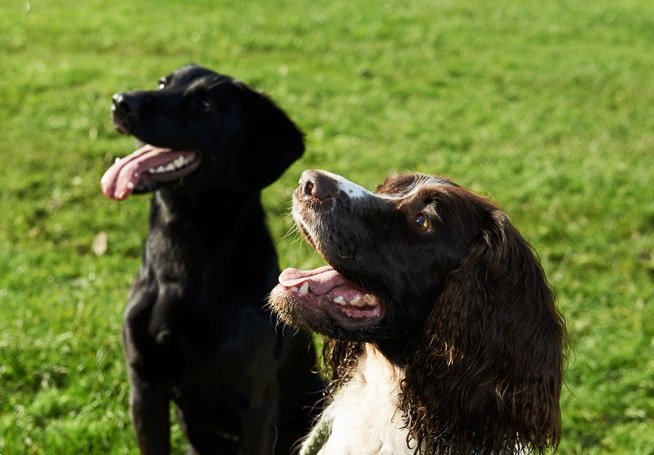
    Dogs sitting

    All dogs need exercise. Studies as well as experience have shown that dogs who are getting adequate exercise are healthier and happier. They are also more social when they are in public places. When dogs are given regular exercise, they are more calm at home and are less restless when left alone. However, just like feeding, choosing the right amount of exercise for your dog should depend on several factors. These factors are age, size, and type of breed.
    Brought To You By Fit & Fun Dog Month 2013

    Fit & Fun Dog Month sponsored by Butchers Lean & Tasty

    ‘Still as Fit as a Butcher’s Dog’

    Age: Puppies require daily exercise for proper muscle development. Their high energy levels need to be released in some form of constructive activity, and giving them their daily exercise is the best way to do it. Not being able to release their pent-up energy can lead to destructive behavior such as chewing or digging. On the other hand, a mature, aging dog needs less exercise because of their lower energy levels.

    Size: Large dogs do not necessarily need more exercise than small dogs. In fact, many large breeds like the Mastiff or Great Dane would rather relax and sit on the porch all day then go out for a 2 mile run. Nevertheless, they also need their daily exercise, perhaps one or two 30 minute walks everyday. On the other hand, many types of small breeds such as the Jack Russell Terrier or Chihuahua still keep on going even after a three-mile walk.

    Type Of Breed: Your dog’s breed is a contributory factor with regard to the amount of exercise required. For instance, dogs that were originally bred to herd such as the Australian Cattle Dog, Border Collie, and German Shepherd need to be exercise daily. Another example of a breed that requires daily exercise are those that were originally bred to hunt (hunting dogs). Examples of these dogs are the Beagle, Chesapeake Bay Retriever, and German Hunt Terrier. And finally,sled dogs such as the Siberian Husky, Samoyed, and Alaskan malamute share the same high level of energy as the herding dogs and hunting dogs.

    Exercise Helps Prevents Obesity

    PDSA Senior Vet, Sean Wensley has the following advice for owners concerned their pet may be gaining too much weight:

    Prevention is better than cure: Some owners are worried about seeking advice for their overweight pet for fear of being judged but preventing obesity is much easier than getting a pet to lose weight. A good diet when a pet is young is essential – fat puppies and kittens are more likely to become fat adult pets due to the number of fat cells they produce while growing.

    Balanced diet: Weight loss requires a combination of the right natural dog food diet and the right amount of exercise.  Many owners feed ‘by eye’ and it’s easy to accidentally overfeed pets, so use scales to weigh out the daily food allowance each morning. Follow packet feeding guidelines or ask your vet about correct amounts.

    Proof It Can Be Done!

    Lucy, a 4 year old flat coated Retriever has always been an active family dog and enjoyed exercising keeping up with the families’ two horses and two other dogs.

    Despite attempts by Lucy’s owner, Gina, to manage her weight by reducing the amount of dry food given, she still gained weight prompting Gina to look to another diet to help her loose weight, as exercise wasn’t the reason for weight gain.
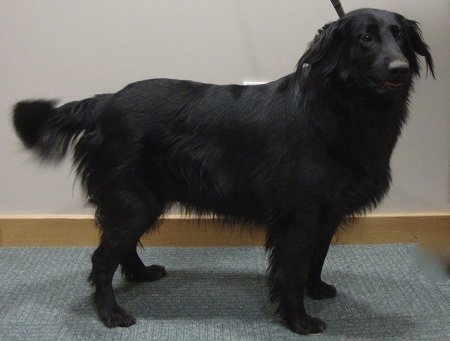
    Lucy before trialing Butchers Lean & Tasty dog food

    Lucy, before trialing Butcher’s Lean & Tasty

    After a 16 week trial being fed on Butcher’s Lean & Tasty, Lucy lost 5.8kg and regained her glossy coat and waistline!
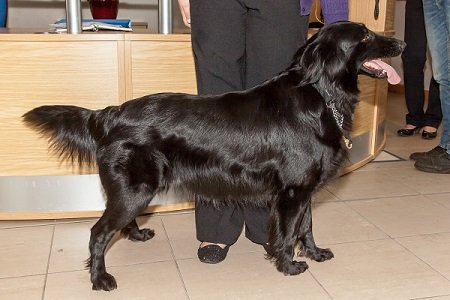
    Lucy after trialing Butchers Lean & Tasty dog food

    Lucy, after trialing Butcher’s Lean & Tasty

    Regular exercise: Build up activity levels gradually, as a pet shouldn’t go from couch potato to marathon runner overnight. Encouraging play and games is a great way to increase a pet’s activity levels, but every pet is different so ask your vet about how much exercise your pet needs

    Ultimately your individual dog will have specific exercise requirements that apply to them as an individual. Speak with your vet about getting an all round health check where you can also discuss individual activity requirements for your dog, no matter what the breed.

    Butcher’s Lean & Tasty meaty complete meals with 30% less fat is a more natural dog food, as are all of the Butcher’s products, because they contain no artificial colours, flavours or preservatives.
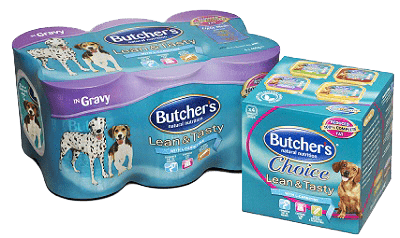
    Butchers-Lean-and-Tasty-dog-food-pack

    Visit the Butcher’s Pet Care website and use the tool to find the right food for your dog – butcherspetcare.co.uk
     

  • Proper Dog Nutrition Defined

    Here at Dog Nutrition, we often receive enquiries from people who are keen to understand what exactly ‘proper dog nutrition’ means. The dog is not a true carnivore in the same sense as, for example, a cat. This means a dog’s diet can be more varied and still produce positive health. Whereas a cat MUST eat meat in order to be truly healthy and for proper nutrition to serve its goal.

    So what does proper nutrition mean for dogs?

    Proper Dog Nutrition

    Proper Dog Nutrition: Fats in the Dog’s Diet

    An important nutrient that all dogs need and one that is responsible for furnishing energy in their body are fats. Fats supply energy for the body to use. It also has a small role in building strong cells and promoting the absorption of nutrients. However, similar to the essential amino acids, a dog’s body isn’t able to produce these essential fatty acids, and therefore has to come from an outside source, from the food they eat.


    Dogs do not usually develop a deficiency in fatty acids because their basic diet normally provides them with sufficient amount of energy from fat. In fact, a small amount of extra fats benefit their body in several ways. It protects them from the cold; it provides cushion to their body; and it serves as a protective layer of covering around different organs in their body. Actually, dogs are very efficient in using their stored fats because their bodies have the ability to easily turn these fats into energy when needed.

    Too much of a good thing can be a bad thing

    Fats are very beneficial, but it can become a concern when the dog eats too much of it. Too much fuel in the dog’s body, regardless of where it came from, is converted into body fat, which is then stored in the body. Too much fat in the body results in obesity and other conditions that are related to obesity such as diabetes, canine osteoarthritis, and heart disease.

    There is only a limited amount of fat that is used for protection against cold, cushion, covering, and extra energy. But when the maximum amount of stored fat is reached and applied for these purposes, the dog still continues to stock up fat and does so to the same degree that is equivalent to the excess energy that it consumes. For instance, every 3,500 calories that a dog eats in excess to what his body requires will be turned into 1 pound of body fat.

    It is important for all dog owners to know that the only way for their dogs to get fat is if they take in more calories than their bodies use.  Similarly, the only way for the dog to lose weight and get rid of the excess fat is by taking in less calories than what their body requires.

    Proper Dog Nutrition: Protein in the Dog’s Diet

    How does protein work in a dog’s body? Picture a string of beads and each string is needed to produce a complete picture or an artwork. The job of protein in your dog can be compared to this strings of beads. Each protein is similar to individual strings of beads. Just as these strings are put together in the right order to create a picture, different types of proteins have to go together to be able to produce a dog.

    Each string is made up of different numbers of coloured beads that are lined up in an exact pattern to produce certain body parts such as the hair, the nose, or the ear of the picture. The coloured beads can be compared to amino acids, or substances that are connected to the strings to produce different proteins.

    There are 23 amino acids that are the molecular building blocks of protein.  A dog can produce 13 amino acids inside his body while the other 10 amino acids must come from an outside source and has to be consumed.  A puppy will not grow unless he is supplied with the remaining 10 essential amino acids.  Without them he will become sick and will eventually die. Similarly, if an adult dog is not getting the proper amount of these 10 amino acids, he will become weak and suffer nutritional deficiencies.

    These 10 essential amino acids can be acquired from meat and plants, which offer the best sources because they contain the largest number of essential amino acids.

    Not all proteins are the same, as some are better for your dog than others. The amount of protein a dog needs depends on how much of the essential amino acids are supplied by that protein. The protein’s ability to provide the dog’s Minimum Daily Requirement (MDR) of the 10 essential amino acids is referred to as its “biological value”.

    Here are a few additional facts about the importance of protein for your dog’s health:

    1. Proteins are the building blocks of your dog’s body.

    2. Proteins are necessary for all aspects of growth and development and are very important in structural makeup and the immune system. In addition, they are burned as calories and can be converted to and stored as fat if needed.

    3. They are required for healthy nails, skin, and coat.

    4. They are necessary for the production of hormones in the bloodstream.

    5. They provide a healthy immune system.

    Proper Dog Nutrition: Carbohydrates, Vitamins & Minerals in The Dog’s Diet

    Carbohydrates

    The main source of carbohydrates are acquired in plants. There is also one source of carbohydrate that comes from meat called glycogen, but it is only found in small amounts in the liver and muscles.  If your dog is not getting enough carbohydrates in his diet, the liver has to do extra work to make glucose from proteins.  On the other hand, when your dog is getting enough carbohydrates in his diet, his body will not have to use proteins to get its required amount of glucose, therefore, saving these precious proteins to be used to for other jobs that they are required to do.

    Vitamins

    Vitamins are not considered to be building blocks, and they are not necessarily required for the production of energy. However, they are important in your dog’s health in a number of ways described below.

    1. Dogs need vitamin A for healthy skin and coat. Skin conditions and poor coats have been associated with lack of vitamin A and/or vitamin B.
    2. Vitamin B is responsible for a healthy immune system.
    3. Studies have concluded that vitamin C prevents dogs from getting hip dysplasia.
    4. Dogs need vitamin D for healthy teeth and bones. Deficiency in this vitamin produces weak teeth and brittle bones.
    5. Vitamin E is an excellent source of antioxidants. Deficiency in vitamin E can lead to heart problems and several types of cancers.
    6. Vitamin K is used for blood clotting.

    Minerals

    Unlike other nutrients, minerals are used by the body in a more comprehensive way.  Below are examples of some of the ways minerals benefit your dog:

    1. Minerals such as calcium and phosphorous are required for strong bones and cartilage.
    2. Minerals are needed for the nervous system to function properly.
    3. They help promote muscle metabolism.
    4. They are used in the production of hormones.
    5. Minerals transport oxygen in the blood.

    It is important to know that too much or too little of a certain mineral can affect the functions of other minerals in your dog’s body. In addition, there are also cases where the action of one mineral depends upon the action of another mineral.  For example, the minerals iron and copper work hand-in-hand to produce hemoglobin. Iron is necessary to produce hemoglobin in red blood cells while copper is equally important for hemoglobin formation. One will not be able to function properly without the help of the other.