Category: Dog Advice

From dog training to canine health, see our latest dog advice articles here

  • How Long Do You Feed A Dog Puppy Food? (12 Best Experts Say This)

    As often as we’re asked how long do you feed a dog puppy food, it’s quite remarkable how many people are genuinely worried about moving their puppy to adult food either too soon or too late.

    You should feed a puppy on puppy food while they’re younger than 12-months, but the transition process can start earlier.

    Your dog is a puppy for as long as you want them to be. Nobody is going to tell you different. But in the interests of answering this specific question of how long do you feed a dog puppy food the appropriate time to stop feeding puppy specific food is no later than 12-months old.

    how long do you feed a dog puppy food

    Why?

    Because in purely simplistic terms, at 12-months old your puppy is technically an adult.

    Let’s break down the puppy to adult dog process.

    As you can see, puppy growth stages can seem like a flash before our eyes.

    Puppy development – the baby to the teenager to the adult dog

    Puppy (young)

    Adorable. Surprisingly obedient. Love to be around you. Often bolder than you’d expect. Sleeps a lot.

    Puppy (16 weeks)

    Personality developing. More cautious about certain scenarios. A little more mischievous. Willing to explore more. Sleeps a lot.

    Puppy (6 months)

    A little less obedient. High energy. Sleeps far less. More interested in food. More demanding and in pursuit of mental stimulation.

    Puppy (6 months to 12 months)

    Personality shining through like a beacon. Sometimes obedient, sometimes wilfully challenges instructions that you know for certain the pup understands.

    Physically very active, but prone to exhausting themselves quickly in short bursts.

    At 12-months old your dog’s needs are different, particularly their nutritional requirements.

    Summary: How long do you feed a dog puppy food

    With all this info in mind, it’s important to recognise the different energy levels of an young adult dog vs the different calorie needs of a growing puppy.

    Puppy foods are designed specifically to help them grow.

    Adult dog foods are designed to help an adult maintain and thrive.

    If you’d like to learn more about the dog growth stages, from puppy to adult – download this free eBook

    Free Book (useful for all dog owners)

    If you’d like to learn more about dog growth stages, from puppy to adult – download this free eBook

    Remember the pet food you give to your puppy should be based on various factors.

    1. Nowadays there are foods for large breeds, toy breeds and various breed specific foods.
    2. Always feed your puppy with the highest quality food you can afford. You never get the chance to have that vital first 12 months of your dog’s development back again.
    3. Switch from puppy food to adult dog food at or before 12-months old
    4. A puppy’s mother s milk helps them develop for the first weeks of their lives, after that it’s entirely down to us!
    5. High quality dog food isn’t always the most expensive dog food (do research for reviews)
    6. Decide how many times a day you want to feed your dog when they’re an adult and slowly transition to that feeding regime
    7. At 12- months of age your puppy is technically an adult dog
    8. Puppies grow fast. Really fast.
    9. Your puppy may reach maturity (physically) many years earlier than they reach maturity mentally
    10. Feed your dog based on their age, breed type and lifestyle at all times – factoring whether they’re a small, medium or large breed
    11. Keep a close eye on body condition throughout your dog’s life
    12. Develop a strong relationship with your vet. Yes, vet bills can be expensive – but the more often your vet sees your dog, the better they’ll get to know them. If your vet sees your dog for regular checkups, your vet bills will be lower in the long run

    Dog nutrition experts views on when to switch from puppy to adult dog food

    Some further reading on how long to keep a puppy on puppy food (expert sources)

    Puppy feeding fundamentals American Kennel Club
    How long do dogs eat puppy food? — age, transition & methods Breeding Business
    Puppy Food Types, Feeding Schedule, and Nutrition WebMD
    When Should You Switch from Puppy to Adult Dog Food | petmd PetMD
    How long should i feed my dog puppy food? Dog Food Guide
    Puppy feeding guidelines | schedule & tips | cesar’s way Cesar’s Way
    When to switch to adult dog food Purina
    Is Your Puppy Ready for Adult Dog Food? | Douglas Feed & Pet Supply –
    Granite Bay, CA
    Douglas Feed
    When to Switch to Adult Dog Food: Dog Food at Different Life Stages Pet Central by Chewy
    Is your puppy ready for adult dog food? IAMS
    Puppy feeding fundamentals American Kennel Club
    When To Switch A Puppy To Adult Food – caninejournal.com CanineJournal.com
    When to switch to adult dog food Eukanuba
    How Do I Switch or Transition Foods for My Dog? | Hill’s Pet Hill’s Pet Nutrition
    Switching to adult food from puppy food | cesar’s way Cesar’s Way
  • How Much Should I Feed My Dog? (22 Top Expert Tips)

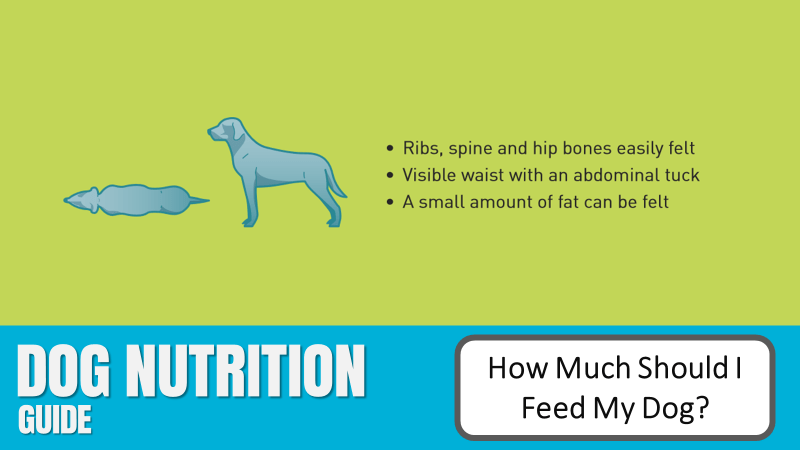
    When I got my very first puppy one of the first questions I needed to answer was, how much should I feed my dog? Now, having cared for many dogs and been involved in dog ownership for multiple decades, guess what – I still ask the same question, only slightly modified: how much should I feed this particular dog, right now.

    how much should I feed my dog
    Know your dog’s healthy, optimum weight

    Novice dog owners and experienced dog owners will face this conundrum on a regular basis.

    The answer is, you feed your dog according to the following rules:

    1. Your dog’s age
    2. Your dog’s breed / type
    3. Your dog’s current weight
    4. Your dog’s current activity level
    5. Your dog’s specific ability to handle different types of food

    How much food does a dog really need?

    It seems not many a day goes by where we’re not hearing more about the rise and rise of obesity. Sadly, our pets are also widening around the girth.

    It is of course easy to control the amount of food your dog is eating and it is essential that you gauge your dog’s weight on a regular basis to ensure that it doesn’t get obese.

    Health problems from overfeeding dogs

    There are an increasing number of dogs suffering from this disease and in most cases this could have been avoided through the correct nutrition and monitoring the amount of food the dog has been eating.

    Having a dog with diabetes will necessitate the injection of insulin or in some cases taking of pills to assist in the maintenance of the correct sugar levels in their blood.

    Obviously this involves additional expense and inconvenience and there is also a danger that should the insulin level be incorrect your pet could die. All of this from simply giving them too much food? You bet!

    Dog feeding guidelines: how much food should me dog be eating?

    It makes sense then that your dog should only eat what is good for it and in quantities that won’t result in it developing health problems later in life.

    Feeding guidelines on dog food can be a good starting point when assessing how much dog food is the right amount, but as Dr Lowe told K9 Magazine:

    “feeding guidelines on dog food packaging are extremely useful but should serve as a starting point only when assessing the right amount of food in your dog’s daily diet.”

    Working dogs will need more food for the energy that they will expend in the course of the day but a dog that lays around the house all day and doesn’t get any exercise will not need to eat the same portions of food.

    You should weigh your dog on a regular basis and see whether it is gaining or losing weight and adjust the amount of food it is eating accordingly.

    You know, it’s quite incredible the amount of people who have literally no idea how much their dog weighs or indeed any idea of how much they should weigh. Simply getting to grips with this information can literally extend your dog’s life, in some cases for a considerable amount of time.

    Many experts argue that there has been a general decline in the general health of dogs that correlates with the widespread introduction of certain types of processed dog foods.

    Many of these low quality dog foods offer very little nutritional value but it is their convenience and the fact that they have added flavours that ensure our pets get delight in eating them that have increased the sales and popularity of this food. Understanding your dog’s specific nutritional requirements, again, can add years to their life.

    Free dog weight chart

    Bad diets for dogs have tragic consequences

    Just as we might like to eat foods that contain sugar, which is detrimental to our health, our dogs also like to eat these low value foods because they taste so good – in many cases, with dogs being such scavengers, they’ll simply beg for ANY food that’s potentially on offer. It is entirely in our control not to harm their health by giving in to their longing expressions! So if you’re wondering how much should I feed my dog of sugary snacks…the answer is (if possible) zero!

    Can I feed my dog table scraps?

    If our diet is bad, often our dog’s is too. Don’t believe me?

    A study by K9 Magazine showed that 98% of dog owners had fed their pets with scraps from their own tables at one time or another.

    Dogs can eat table scraps, of course, but it’s a simple formula to calculate that if our own diet is not healthy and we’re sharing that with our dogs then – our bad food = dogs sharing in our own poor diet!

    But therein lies another problem with many of the foods that we eat, unsuitable for dog consumption.

    Many people are finding good results in preparing their own dog food using only those ingredients that will enhance the health of the dog but don’t discount the range of high quality diets that are available in prepared form. Don’t for a second assume they’re all bad because nothing could be further from the truth.

    Good quality dog nutrition is available in the form of commercially prepared foods, canned dog food, raw dog food and even tailor-made dog food. The quality isn’t the main issue here if you’re asking yourself how much should I feed my dog, but over (or under) feeding will have a detrimental effect on your dog in multiple ways. It can and most likely will lead to them having a shorter lifespan.

    What the experts say about how much you should feed your dog:

    Here we’ve summarised a series of tips from credible dog nutrition sources to help you answer the question how much should I feed my dog:

    1. Naturally, smaller dogs need less food than larger ones, but what exactly is the perfect number? First, it’s important to have an accurate handle on how much your dog weighs and whether their body size is considered small, medium, or large.
    2. Young pups and senior dogs have very different needs – puppies need food for their growing bodies while adult dogs’ diets should be focused on maintaining their health.
    3. One of the best ways to keep dogs healthy is to feed them the right amount of a high-quality dog food. Feeding a lot more of a low quality food doesn’t compensate for nutritional deficiencies.
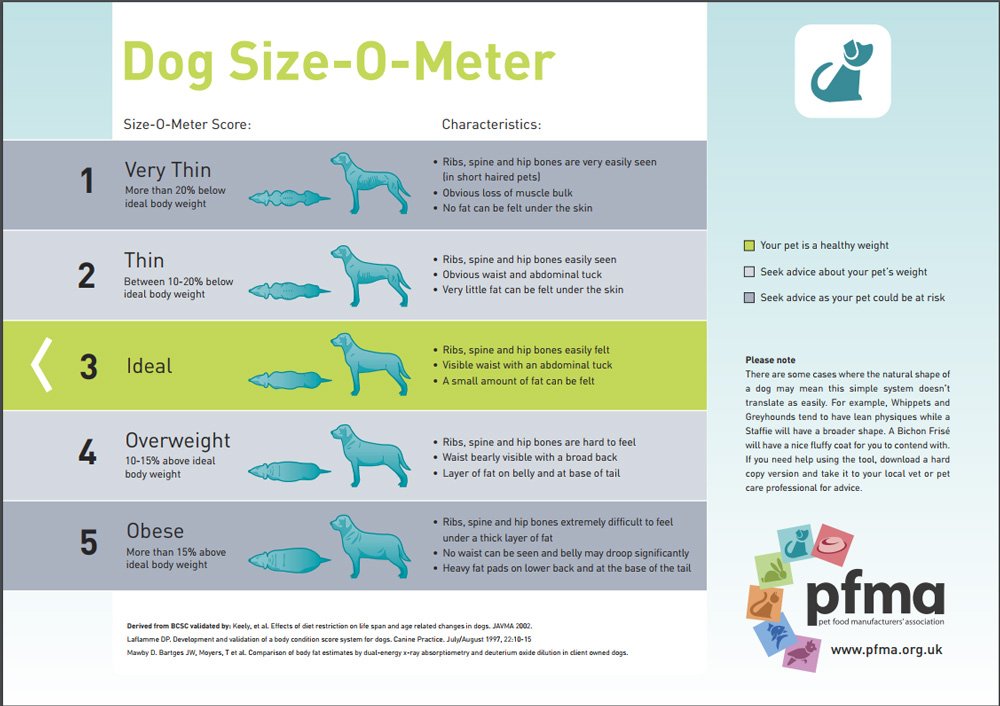
    4. For more on diagnosing an overweight dog, see this dog weight chart.
    5. If you are feeding a different brand, please consult the calorie information on-pack and adjust the amount of food accordingly to meet your dog’s recommended daily calories. Many people make the mistake of switching dog food brands and assuming they can feed the same volume of dog food. That can have big consequences.
    6. To determine how much food to feed your dog, you should start by knowing your dog’s estimated adult weight. Weighing your dog is the key to knowing how much to feed them.
    7. The value of feeding your dog a high-quality food is huge. Poor quality foods produce more waste, can cause digestive problems and often end up being more expensive (because to satisfy your dog you will need to feed him comparatively more).
    8. If you have an adult dog that maintains normal activity levels and doesn’t need special nutrition, check out pet food company Purina’s Dog Chow guide below to see how much food to feed your dog.
    9. It is also not ideal to feed your dog cat food as, since it is designed for cats, it doesn’t have the right balance of vitamins and minerals for dogs.
    10. A healthy feeding schedule and diet will ensure your dog is getting all of the proper nutrients they need from their food. (see: how often should I feed my dog?)
    11. It’s not just a matter of food quantity, so another question is, “How many calories should my dog eat?” There is a dog feeding calculator by weight available in the links below if you’re wondering exactly how much I should feed my dog.
    12. If you are using a commercial dog food, feed your dog the amount printed on the bag that fits with your dog’s ideal weight. This is so, so important. (see how to read dog food labels)
    13. Thinking about feeding raw dog food? (see Raw dog food for beginners)
    14. Since puppies are growing rapidly, they need more food than adult dogs in some cases (whacky, but true)
    15. Not all dogs can or need to eat the amount recommended by the food manufacturers. Speak with your vet if your dog is following the manufacturers guidelines but is either gaining or losing weight.
    16. Does the amount to be fed in the feeding guidelines pertain to each meal or the daily amount of how much I should feed my dog? How accurate are the feeding guidelines on my dog food label? The manufacturers’ recommended feeding guidelines are a starting point but your dog is your dog, so you’ll need to adjust accordingly.
    17. Too little food each day can cause dogs to be deficient in vital nutrients that help keep dogs healthy.
    18. Puppies need a high-energy food and because they are growing so fast they’ll require a food with more protein and calcium to help build a healthy adult dog, and more calorie-heavy fats to load them up with fuel.
    19. Dogs that gulp their food down too quickly tend to take in large amounts of air whilst eating which can cause stomach and digestive system upset. (beware the dangers of bloat in dogs)
    20. Even though puppies grow quickly, it’s important to keep caloric intake and food amount consistent from four to twelve months of age.
    21. Older dogs usually require lower caloric intake and may get heavy eating the same food they were eating in their younger years.
    22. Most adult dogs should eat two meals a day, and puppies often require three or more feedings, so you’ll need to divide the amount in the table by the number of meals you are offering.

    How Much Should I Feed My Dog – Sources

    How Much To Feed Your Dog | Prudent Pet Insurance Prudent Pet Insurance
    How Much Should Dogs Eat? | Calculate How Much to Feed Your Dog | PetMD PetMD
    How Often Should You Feed Your Dog? American Kennel Club
    Dog Feeding Guide Purina
    How Much Food Should You Feed Your Dog? | Dog Food Advisor MedicAnimal
    Dog Food Calculator by Breed & Weight | JustFoodForDogs JustDogFood
    Dog Feeding Time: How Much and How Often? WebMD
    Do You Know How Much You Should Feed Your Dog? Central California SPCA, Fresno, CA
    10 FAQ’s about dog feeding guidelines | Dry Dog Food | Dog Food |
    MedicAnimal.com
    MedicAnimal
    Dog Feeding Guidelines Purina
  • MCT Oil Could Help Dogs With Hard to Treat Epilepsy, New Study Reveals

    MCT Oil Could Help Dogs With Hard to Treat Epilepsy, New Study Reveals

    Epilepsy is the most common canine neurological disorder and it is estimated that four in 100 dogs will suffer from the condition and it can affect dogs in different ways.

    Some of the most common dog breeds affected by epilepsy include German Shepherds, Beagles, Golden Retrievers, Border Collies, Cavalier King Charles Spaniels, Dachshunds, Border Terriers, English Springer Spaniels and Labrador Retrievers.

    New research conducted by the Royal Veterinary College (RVC), funded by The American Kennel Club Canine Health Foundation (AKC CHF), has tested the effects of an oil supplement on seizure frequency in dogs with drug-resistant epilepsy, with very encouraging results.

    The RVC say their research shows that small changes to the diets of dogs with hard-to-treat epilepsy has the potential to reduce the number of seizures and improve the quality of life for affected dogs and their owners.

    Epilepsy is the most common long-term neurological condition in dogs and can be very distressing for both dogs and their owners. Current treatments focus on managing the condition and reducing how often seizures occur. However, despite treatment with appropriate anti-seizure medication, approximately one-third of dogs continue to experience frequent seizures. This has significant impacts on their behaviour and cognitive functions and can also make dogs prone to anxiety.

    Helping develop new treatment strategies to reduce epileptic seizures and improve the overall welfare of dogs, a team of researchers, led by veterinarians Professor Holger Volk and Dr Benjamin Andreas Berk, alongside canine behaviour and welfare scientist Dr Rowena Packer, at the RVC, tested the effects of an oil supplement on seizure frequency in dogs with drug-resistant epilepsy.

    Previous research by the RVC had shown that the oil, which contains a specific type of fat known as medium-chain triglycerides, or MCTs, could have beneficial effects when included within a dry kibble diet. During this study, the oil was added as a supplement to a dog’s existing diet to determine if the same benefits could be achieved. The oil was tested in a rigorous clinical trial during which 28 dogs received the MCT oil for three months and a placebo oil for three months. Both owners and investigators were blind to which oil dogs were receiving during each phase.

    Overall, dogs had significantly fewer seizures during the MCT phase compared the placebo phase, and an improved owner-reported quality of life. New therapies are urgently needed to improve the quality of life of affected dogs and their owners and the results of this study offer a promising addition to other methods commonly used to treat canine epilepsy.

    Dr Rowena Packer, BBSRC Research Fellow at the Royal Veterinary College, said:

    “Epilepsy is often a challenging and distressing condition for dog owners to manage, particularly when dogs don’t respond to anti-seizure medications in the way their owner and vet might have expected or hoped. Historically, diet has not been considered a key part of epilepsy management, but along with other recent findings, these results indicate that nutrition likely plays an important role in seizure control.

    “Our novel findings indicate that a relatively small change to the diet of dogs’ with hard-to-treat epilepsy can potentially reduce the number of seizures they have, while also improving their medication side effects and overall quality of life. MCT oil offers a promising addition to the wider epilepsy management tool-kit.”

    Dog epilepsy seizure triggers

    Canine epilepsy seizures are stressful for both the dog and owner and can appear unpredictable and uncontrollable.

    Dr Sarah Finnegan, a PhD student at the RVC studied the behaviour and environment of dogs to identify seizure triggers to help dog owners spot signs that their dog might be about to have a seizure.

    Here are some of the most common triggers and signs dog owners reported before a dog had an epileptic seizure:

    • Nearly two thirds of owners reported pre-seizure changes in their dog (65 per cent), most commonly stating clinginess, excessive energy, and unsettled sleep.

      These signs varied between dogs, with other common changes including clumsiness, excessive panting, becoming withdrawn or quiet, and lacking energy.

    • Nearly half of owners (43 per cent) also reported seizure triggers, which commonly involved stress, food and excitement.

      A wide range of other triggers were reported by owners including loud noises, fireworks, storms, household products (cleaning products and air freshener), and preventative healthcare including flea and worming products and vaccinations.

    • Over half of owners (60%) believed they were able to predict an upcoming seizure in their dog by using a combination of pre-seizure changes and recognising triggers.

      Nearly half of these owners were able to do so 30 minutes or more before the seizure commenced.

    Dr Rowena Packer, BBSRC Research Fellow and research lead in canine epilepsy at the RVC, said:

    “It was fascinating to discover how in-tune many owners of dogs with epilepsy are with subtle changes in their dog’s behaviour before seizures. Many of our findings echo what is seen in human epilepsy patients and add evidence to support the presence of prodromal pre-seizure periods in dogs as well as people. Collecting further objective data to confirm these findings and explore ways to proactively utilise this period for seizure management are of priority for future research.

    “This study also highlights how crucial it is that owners of dogs with epilepsy keep good records, not just of their dog’s seizures, but also of changes in behaviour and exposure to potential triggers, to gain a better picture of patterns in their dog’s seizure activity. The RVC Pet Epilepsy Tracker app allows owners to keep records, that can also be shared electronically with their vet and with RVC for further research.”

  • Simple Tips to Help Your Dog Live Longer

    It’s now a well-established fact that being a dog owner helps you live a longer, healthier, happier life.

    So with that in mind, here are 20 great tips that will keep both you and your dog in the peak of health… Doga! All the benefits of Yoga, suppleness, flexibility and muscle toning and dogs can join in too.

    Take your dog with you on that journey for internal peace. You can both hold the ‘mountain’, ‘lotus’ or ‘cobra’ position, but don’t forget to warm up first. An excellent work out for both human and dog is a good old ‘tug-o-war’. Although usually spontaneous, a five-minute session will burn off as many calories as a brisk fifteen-minute walk. Use an old rag or t-shirt and go for it.

    It is best if you crouch down to start with to avoid bending the back improperly. Your dog will love this one, but make sure you win, or you could be saddled with a very cocky young pup! Short and often beats once a day. Walking the dog should never be a chore. Frequent, shorter walks are often more beneficial to you both than one long stroll a day.

    Want more tips on how to extend your dog’s life?
    Our friends at K9 Magazine have produced 100 tips on how to help your dog live a longer, happier, healthier life. If you’d like to get expert insight in to ways you can help your dog to live longer:

    Learn More ⇢

    Bringing your heart rate up regularly increases cardiovascular fitness. A two-minute jog completed by a five-minute stroll four times a day will get results pretty sharpish. Make minor diet adjustments. Replacing fizzy drinks with cordial will benefit a weight loss programme. Small changes that do not overhaul your lifestyle are easier to stick to. Changing an overweight dog’s portion size beats re-designing his whole diet plan.

    Worming your pet is important all year round, however, for one hookworm, in particular, Uncinaria stenocephala, there is a sharp rise from July to September. In heavily infested pups, it can have nasty results such as diarrhoea, anorexia and lethargy. By worming every three months your pet will be protected.

    Camp it up. A camping trip with your dog is fun and can offer lots of opportunity for exercise. It will give him a whole new world to sniff and the exercise happens without you even noticing. Let him do all the work. If you are looking for an easy ride, but want your dog to get a work out get a Frisbee. All you need to do is toss the thing and he will (hopefully) bring it straight back. This will provide an excellent aerobic work out for him that will also relieve any boredom. If possible, incorporate water into the activity. Toss the Frisbee into the pond or lake (it will float) and let him swim for it.

    BARF. A diet based around raw meat and bones is a superb and very natural diet for a dog that could use a little more protein. Although it may not sound it, this diet is very healthy and suits all breeds of dog. Not sure about raw? Not to worry, you can delve into the subject and read raw dog food pros and cons here to help you decide if a raw diet is right for your dog.

    Hide his toys. If you have a lazy dog, a good way to encourage exercise is to move his toys whenever you go upstairs. If he is loafing about downstairs make sure, the next time you go up the stairs that you take his favourite toy with you. It may only be a small amount, but any exercise is better than none.

    This can also be practised at mealtimes. To avoid a soaking. Long-haired breeds require frequent grooming. When showering or bathing your dog, always wait until the very end to wash the head. You will notice that your dog will only ‘shake out’ when his head gets wet. For supple joints, both of you should eat fish once a week.

    It is high in potassium and low in sodium. Coldwater fish such as trout and salmon are both excellent for joints. Older dogs will benefit from the presence of fish in the diet. For a healthy coat. Give your dog a daily dose of Safflower, Corn, Soybean or Cotton Seed Oil in their food (1 teaspoon) this really helps them to have a great looking coat and reduces hair loss. Now you can style your hair in that shiny coat. In the summertime.

    Make sure nobody suffers from sunburn by being generous with the sunscreen. Even the dog should get some factor 12 on his nose. To keep him cool and burn free, a damp t-shirt will do him no fashion favours, but will keep him comfortable. Water, water everywhere. An oldie but a goodie. Water is never bad for you, but it is especially good for the bipedal during the summer months. Six pints a day (not all at once) re-hydrate the skin and flush out many of your body’s impurities. It is always good for the dog to have a fresh water supply, as an over-excited dog can become dehydrated very quickly.

    Regular checkups. A great way to judge a dog’s inner health is by the state of his coat. A full, glossy coat spells a healthy, well looked after dog. But a comprehensive check up by you can be a huge help. You will be able to find any suspicious lumps, be able to tell if he is under or over weight (a thick coat can conceal this) and is a great way to bond with your dog. Once you get used to your dog, you are more likely to spot any alarming changes later on in life.

    Back of the net! Former West Ham United star John Harley is famous amongst his football pals for training with his dog. You too can have a kick about with your mates and get the dog involved. He will love chasing the ball around at your feet and capitalizing on any schoolboy errors you may make defensively!

    For the more dedicated sports person. Ed Moses, the world’s most successful 400m hurdles runner is making a return to athletics at the age of 48. He trained for the comeback specifically with his dog. You can do the same. Anything athletic will or at least should, appeal to a healthy dog. He will try and join you, but he will never defeat you, because you are the champ, aren’t you? Laps of a track are always good for endurance.

    A winning smile can be achieved through regular brushing, and not much else. Despite what people might have you believe, biscuits or chews do not replace a good tooth brushing. To clean teeth sufficiently, there needs to be brushing action. Even he protests, get that brush working on those canine chompers.

    Take a dip. Quite possibly the most beneficial exercise going. This works for all muscle groups. The resistance pressure of the water is dictated by how fast you want to go, and if you get tired get Rover to pull you along with his tail, he’ll love it. Most dogs love a good splash about, you’ll spot the ones that don’t.

    Get in line. If you stick to all of the above you both should be feeling pretty good by the end of the summer. This is when you take that last risk before winter comes round again. Get the skates on. Roller skating or in-line skating is a great way to burn fat, get around faster and provided you can stay vertical, it is a great way for you and your dog to have a good laugh on the park. Watch out for those posing so-and-sos who just want to whip by and make you feel slow.

  • Socialising My New Puppy (Checklist)

    Early puppy socialisation is so important, it’s to overstate just how much impact it can have as the pup grows in to an adult.

    If you read the situations listed on this puppy socialisation checklist, we’d also add some of the following tips for better socialisation of your puppy:

    1. Hand contact. Get your pup used to being touched, stroked and handled.

    2. Exposure to different sounds. Noise phobia can develop at any age, but the earlier a pup gets used to hearing different sounds, the better.

    3. Exposure to other dogs. Not to be done until pup is vaccinated, but exposure to other dogs at an early age can circumvent many problems developing later.

  • Dog Car Travel Tips

    Dogs sometimes feel the need to help us navigate to our/their favourite destination when we’re travelling by car. Many of us have had the ‘pleasure’ of a helpful dog shouting out instructions from the back of our vehicle ‘The park! Let’s go to the park!! Will we be at the park soon??? We’re going the wrong way. This looks more like the route to the vet’s, not the par…oh, s**t!! Turn around, turn around!!!”

    Yes, dogs do make our journeys more interesting in the car. Now a road safety guide for people who travel with their pets has been produced by The Royal Society for the Prevention of Accidents to assist dog owners travel safer with their pets.

    In a motor crash, an unrestrained pet could be seriously injured, or could injure other people travelling in the car by being thrown forward. This new guide gives advice and safety tips which could save your or your pet’s life….

    Travelling with pets can have many hidden dangers. For instance, at 30mph, a 50lb border collie would be thrown forward with a force equivalent to almost 9 12 stone men.

    Even pets that are normally well behaved could be frightened by something unusual, make sudden dives or become noisy and agitated.

    Vets report the high number of animals they treat who have been injured whilst travelling.

    The Department for Transport has worked with the Royal Society for the Prevention of Accidents (RoSPA) and the PDSA to produce an advisory leaflet, Carrying Pets Safely, which explains some of the dangers (to drivers and animals) of driving with unrestrained pets and solutions and helpful tips for making travelling by car as safe and comfortable as possible

    Although drivers aren’t required by law to make their pets ‘belt up’ it is an offence, rule 43 of the Highway Code states that “When in a vehicle, make sure that dogs or other animals are suitably restrained so they cannot distract you while you are driving or injure you if you stop quickly”. Failure to observe provisions in the Code may be used to establish liability for an offence.

  • Why It’s Important to Teach Your Dog to Listen

    Training your dog is among the most important aspects of your pet’s life. Can you imagine living for ten years or more with an untrained animal? This article can help you learn more about the importance of dog training.

    Understanding the underlying motivations to your dog’s behaviour is crucial to successful training. Dog training can be a learning experience, especially with it comes to determining what motivates your pet. Whatever your goals, your dog’s training routine should include variety and plenty of positive reinforcement. If you keep him happy and motivated, he will not disappoint you.

    Your family must be trained to be consistent with commands for your dog. If you use different commands for each action, like using “down” and your wife using “lay,” your dog will get confused. Consistency in the command phrases will make training easier on everyone in the family, including your dog.

    When training your puppy, avoid tug-of-war type games. Games, such as wrestling, chasing or tugging, teaches the puppy to nip or bite at your hands. You want to avoid having your puppy become accustomed to this behaviour, so it is better to postpone these games until the dog is more mature and fully trained.

    Anxiety causes destructive chewing. Placing the dog in a safe environment such as a dog crate and providing a chew toy keeps the dog safe and occupied until your return.

    Make sure you are consistent when you train your dog. Write down the specific commands you want to use with your dog, and get everyone in your household to review the list and use the same words. You also need to make certain that everyone should be rewarding the dog’s good behaviour and not rewarding any bad behaviour. Your dog will become very confused if each person responds differently to a single type of behaviour. This will make training very hard.

    Dogs have a short attention span and you will have to attract his attention. If you get your dog to focus on you, it will help his behaviour.

    Do not try to train your dog if you do not feel you can be patient. Be patient when training your puppy, so you can both stay focused.

    Do not give up when you are trying to train your dog. Your dog requires consistent reinforcement of training, or he may quickly forget what he has learned. Just as you need to keep feeding and sheltering your dog, training is a never-ending process.

    Communication between you and your dog is key to successful dog training. Obviously, your dog needs to know what you are asking of him. Your verbal commands and body language, along with the rewards you give out, should all be consistent. Also pay attention to the communication your dog is giving back to you as that will affect your training routine. He will let you know if he is having a good day or if he is feeling anxious and overworked.

    Having been said before, getting a dog trained will be a great investment. A dog that is not well trained and misbehaves can cause havoc in your home. It can destroy your items, stress family members out, and even alienate itself to the point where nobody wants to have it around. Listening to the information provided in the article, you could make it a choice to have a great a loveable dog.

  • Thinking of Buying a Cocker Spaniel?

    Cocker Spaniels make excellent pets for anyone looking for an obedient, good-natured and loyal breed of dog. As with any breed, Cocker Spaniel puppies are playful, full of energy and great fun to be with and they grow into quite small dogs that are just as friendly and affectionate if not quite so energetic.

    Given their solid reputation as a good family pet you might find it surprising that there are many Cocker Spaniel puppies and dogs currently being cared for in animal shelters awaiting adoption. Why would anyone search for Spaniel puppies for sale when there are so many in desperate need of a permanent home?

    With any pedigree there are people who prefer to buy Spaniel puppies from a breeder, believing that they will somehow be ‘safer’ or healthier pets.

    It is understandable that people with young children will be cautious about introducing a dog into the family home, but actually choosing a pedigree from a breeder is not a guarantee that it will be any safer or more predictable than adopting a Cocker Spaniel from a rescue.

    Indeed, disreputable breeders offer Spaniel puppies for sale that have been bred for appearance and maximum profit but that have not been bred with any regard to temperament or health. Such breeders often advertise that they can offer any breed to order and are actually operating or supporting ‘puppy farms’ where the mother is kept in a confined space and her puppies are quickly removed and inadequately socialised.

    Good breeders do exist, of course, and they care very much about the dogs and puppies in their care. They take measures to ensure that the puppies are socialised and that breeding takes place with dogs carefully selected for their personality and temperament as well as for their physical features. The fact remains, though, that they are breeding more dogs and puppies than there are homes available for them in the UK. Coupled with irresponsible owners who fail to have their dog neutered or spayed and who cannot sell or give away all of the resultant puppies, these breeders are contributing to the ever increasing number of puppies in rescue centres.

    Cocker Spaniels, like any purebred dog, can suffer from hereditary disorders brought about by excessive historic inbreeding. If possible, trace your puppy’s heritage to deduce the likelihood that your puppy will develop any hereditary conditions but remember that without genetic decoding done in a lab this is little more than guesswork. Be prepared to pay for medical treatment for the rest of your dog’s life by taking out adequate pet insurance (check that it covers lifelong conditions as some policies only cover illness for a maximum of 12 months).

    Finally, remember that you cannot rely on the breed of dog to determine what sort of character and temperament it will have. Every dog is a unique individual. Staff at an RSPCA centre will be able to point you towards dogs or puppies that have been monitored and assessed as being potentially suitable for adoption by adults or families and under what conditions.

    Find out more at: https://www.rspca.org.uk/getinvolved/getfundraising

  • Helpful Tips for Stubborn Dogs

    Outsmart Your Stubborn Dog With These Smart Training Tips!

    Dogs of all breeds think the same way. If you get this mindset, it shouldn’t be tough for you to train a dog. This article will provide a little insight into the mind of dogs.

    When it’s time to introduce house training to your dog, put him on a consistent schedule of eating and elimination. By establishing a regular potty-time every day, you will get your dog in the habit of doing his business at the same time daily. This schedule also teaches dogs what it means to “hold it”.

    Scold your puppy for chewing your belongings right away. Redirecting your puppy towards a chew toy teaches him what is appropriate to chew on. This can prevent further damage to your possessions.

    You can rest assured that when you train your puppy, they may have an accident in the house. Clean accidents up immediately to assist in your training efforts. You pet will smell the urine and try to urinate there again. There are many products on the market that can help with this, so check with your local pet shop.

    It can be very difficult to train two dogs together. If your dogs fight or goof off instead of paying attention, it may be wise to do a bit of one-on-one training before training them together.

    If your dog suddenly starts exhibiting behavioural problems, take him to a veterinarian in order to rule out any serious health conditions. There are painful medical issues which cause aggressive or obnoxious behaviour in dogs. This acting out is the only way your pet can communicate with you in regards to a problem.

    Start by teaching your puppy his name. Repeat his name regularly, so he will learn to come to you when he hears it. These are the first words your puppy should learn. Make sure to spend time with your dog in order for him to learn and trust you. If the puppy trusts you, he will be easier to train later.

    The only way to properly train a dog is with a positive and motivated attitude. Always reward your dog when they successfully respond to a command. Using negative reactions and punishment don’t work and they will cause your dog to fear you.

    Try using a crate to assist you in housebreaking your dog. It is important to put your dog out on a regular schedule for the crate method to work. You will have fewer accidents if you take the time to crate train your dog.

    When training a dog to do something complicated, be sure to take it step-by-step. One example of a complex behaviour is getting the newspaper. The first step is him holding an object. Next, he must be able to identify an object by its name. After that, you should teach him how to take the object in his mouth. Then, he should give it to you. As you break the behaviour down into simple steps, your dog will soon grow to master the entire task you want him to complete.

    This understanding of how dogs think and process information is vital to training them. Training programs that make use of such insight, along with thorough preparation, tend to be highly successful. One can provide your dog with better training now that one knows more about their dog.

  • How to Stop Dogs Barging Through Doors

    About half of dogs that barge through doors do so because they are frustrated by captivity. The others are often very active, boisterous types who are either trying to get into the house to socialize with their owners or to continue their social contact by attempting to leave with the owner. Whatever the basic motivation, the act can be both financially and emotionally costly. Such door-dashing has seriously injured children and elderly people, caused premature birth in pregnant women, resulted in injury and death of the dog and, in many cases, causes an automobile accident when a motorist swerves to miss the dog.

    When the problem involves a dog that dashes merely to get out there to run about the neighbourhood, avoiding its owners’ pleas to return, the pet is usually unruly in other circumstances as well. These cases often involve an independent, self-oriented (spoiled) dog. Other factors may involve an early history of unrestricted outdoor activity, followed by restriction because of some problem that has arisen outside (fighting, car chasing, etc.).

    Some cases involve continuous frustration relative to neighbourhood activities, such as the dog’s “fretting” behind a gate or at a window. Depending on the excitability of the animal, it may develop the same type of stereotyped behavior seen in fence-running dogs. Simple freedom-dashing may be tension relieving in itself, or the escaped dog may have a frustration target, such as passing cars, playing children, mail carrier or other animals.

    Correcting The Problem of Door Barging Dogs

    1. Approach the door or gate. (Of course, the door-dasher will be close by.)
    2. Given an inward-opening door, abruptly open it no more than 2 inches and abruptly close it. An outward-opening door should be opened no more than an inch and then closed very quickly, or the dog may push through or get a pinched snout.
    3. As the door is closed, the owner must abruptly move away from it at least 8 feet and praise the dog for following, after which the owner should be encouraged to remain still for at least a minute. If the dog remains at the door, steps 1, 2 and 3 must be repeated until the dog retreats along with the owner.
    4. Step 3 must be repeated until the dog stays away from the door when the owner approaches it and when the door is opened. When this occurs, the door should be opened a full foot. If the pet dashes, the door should again be slammed shut and Step 3 applied with this larger opening.
    5. Step 4 is repeated until the door can be opened to its normal exit width, with the dog staying at least 8 feet away from it. When this is accomplished the owner must stay inside, close the door, return to the dog and praise it quietly. Then the owner should remain in the house, going about some other activity for at least half an hour before repeating the procedure.
    6. When the dog stays away from the door on the initial approach, the owner should then proceed outside, close the door and stay away for at least 15 minutes, after which she should return as nonchalantly as possible

    If this method is applied daily for a few days, most dogs begin to ignore the comings and goings of their owners. Dogs that are extremely tenacious in their efforts to dash through a door ahead of people often have a long history of frustration about barriers, or are highly motivated by a strong stimulus on the other side of the door.

  • Can Dogs Take Human Painkillers?

    One of the biggest search terms that brings people to this site is ‘can dogs take human painkillers?’. The actual article that this leads people to is a news item about a company that has developed painkillers for dogs. I wanted to put up this post to definitively answer the specific question that (a lot of) people are asking about whether they can actually give their dog human painkillers.

    Can Dogs Have Human Painkillers?

    The short and very important answer ‘can I give my dog human pain killers?’ is a resounding no!

    No, no and thrice no. Don’t do it, don’t consider it.

    It is absolutely horrendous for any dog lover to see their dog suffering with any kind of pain.

    We know and appreciate that dogs can’t talk and can’t be specific with us about where their pain might be or even how bad it is.

    But, we know our dogs and we do know when they’re in pain so – it would seem – often times owners will turn to the Internet and research whether it would be OK to slip them a paracetamol or other human manufactured pain management drug.

    Sadly, dogs have come to serious harm and death as a result of being given medicine that was not developed with their specific needs in mind. And sometimes the suffering resulting from such (an honest) error can be excruciating for the dog and obviously very, very traumatic for the dog’s owner.

    There is – and I appreciate this might be the boring response – only one responsible response to a dog in pain and that is to call in the professionals. You can, of course, manage your dog’s health on a day to day basis. For example, there are now dog health tracker apps to help dog owners monitor the day to day well-being of their pet.

    Dogs in pain should be seen by a vet who will be able to both identify the underlying cause and prescribe the most effective pain management solution.

    The sooner the dog can be seen and treated, the faster the issue can be brought under control.

    So, no matter how tempting it may be – be warned: giving dogs human pain killers can kill them and can actually cause much, much worse suffering for the animal.

    Breakthrough on Painkillers for Dogs

    A pharmaceutical company focused on pet health has announced it is to market the first canine pain management product delivered in a transmucosal mist form. Abbott (NYSE:ABT) announced today they have partnered with Velcera, Inc to bring to market the product – currently in clinical trials – which combines the proven pain medication meloxicam, a nonsteroidal anti-inflammatory drug (NSAID) with Velcera’s patented Promist technology, and has been globally licensed for pain management in dogs.

    “Abbott Animal Health is dedicated to bringing high quality and innovative treatments to veterinarians and their clients,” said Lynn Bromstedt, divisional vice president, Abbott Animal Health. “This revolutionary pain management product will be a great addition to Abbott’s existing animal health portfolio and could make medication compliance easier for pet owners.”

    Promist technology delivers the active ingredient through a fine mist to the inside cheek or oral cavity of the animal, where it is quickly absorbed through the mucous membranes of the mouth. Studies show the product is bioequivalent with oral liquid formulations, and bioavailability can be as much as ten times that of a tablet formulation, depending on the active ingredient.

    In addition to convenience for pet owners, Promist(TM) technology has several other advantages such as increased dosing confidence, faster absorption than delivery with a tablet or liquid and less concern with food interactions.

    “Being able to partner with a trusted company like Abbott on a product of this nature is a testament to the importance of this technology,” said Dennis Steadman, chief executive officer, Velcera. “This agreement will help bring this new treatment method to market for the benefit of pets and pet owners.”

    The product will expand Abbott Animal Health’s core focus areas, which currently include products in the areas of diabetes, anesthesia, wound care and fluid therapy, in addition to a recently announced partnership for one of the first cancer medicines designed specifically for dogs.

    Under the terms of the agreement, both parties have committed to consider future product developments and registrations using the Promist technology.

    The news of advancements in pain management for dogs is one sure to be warmly welcomed by owners. The issue of what pain medicine can be used on dogs is one of the most popular dog related search terms online. Analytic data suggests many dog owners turn to the web first to ask questions such as ‘can I give paracetamol to my dog?’ and other related terms. If you suspect your dog is in pain it is an absolute must to consult with a vet and never, ever attempt to give a dog human painkillers.

  • 15 Life-Threatening Emergencies That Require Urgent Vet Care

    Emergency vet care advice during the coronavirus / covid-19 UK lockdown.

    The UK government’s coronavirus measures have given millions of animal lovers more time than ever with their pets — and more concerns than ever about what might happen if they become ill.

    While veterinary practices across the country are allowed to stay open under the current lockdown restrictions, face-to-face contact has been reduced and guidance from the veterinary surgeons’ regulatory body, the RCVS, has restricted veterinary care to emergency treatment only.

    All veterinary clinics, hospitals and practices have now switched to fulfilling urgent prescriptions and providing emergency pet services only.

    But what is an emergency? Here are some of the conditions that emergency vets deem to be potentially life-threatening. These have been compiled by leading emergency vet, Dave Leicester, Head of Clinical Intelligence at Vets Now.


    1. Breathing difficulties

    Signs of breathing problems may be obvious, such as choking, gasping and pawing at the throat. Or, they may be more subtle such as breathing through the mouth, panting at rest or increased noise when breathing. Objects stuck in the airway, allergic reactions to stings, infections and injuries are all possible causes. Breathing problems can be immediately life-threatening in pets, so help should be sought immediately. Find out more about breathing difficulties in dogs and cats in our advice in-depth advice articles.

    2. Open wound injuries

    Heavy bleeding should always be considered an emergency and any bleeding that is a constant flow (especially if pulsing) or doesn’t stop in a few minutes also needs to be seen by a vet urgently. If you are able to safely do so, you can apply firm pressure on the wound, and raise it above the level of the patient’s heart, to slow the bleeding before getting to the vet.

    3. Traumatic injuries

    If your pet has been injured in a fall, from a window for example, or been hit by a car, they may have suffered serious internal injuries that aren’t immediately obvious. Many animals suffering from chest trauma may seem fine initially but can die later from severe bruising to the lungs. So do seek urgent veterinary help and advice.

    4. Bloating in dogs

    Bloating can be a sign of something called gastric dilation and volvulus, GDV, which is also known as torsion. It is a medical and surgical emergency which can be rapidly fatal if left untreated, but the good news is the survival rate of dogs who undergo emergency surgery after being diagnosed is as high as 80%. If you see your dog retching unproductively, or only producing froth, or developing a swollen abdomen, get help immediately.Find out more about bloat in dogs here.

    5. Failing to urinate

    This can happen to any animal but is most common in male cats. If your pet can’t urinate it can lead to kidney failure, bladder rupture and death from internal poisoning. Signs can be confused with constipation, so if you see your male cat constantly straining in the litter tray you should get urgent veterinary advice.

    6. Seizing and fitting

    Prolonged or frequent seizures can be deadly but regardless of whether your pet has had one fit or several, you should contact your vet or your nearest Vets Now urgently.

    7. Poisoning

    If you know your dog has eaten something poisonous – or even suspect it – call for help. Although many poisons can be counteracted with prompt action, waiting for symptoms to appear makes this harder and the chances of success drop rapidly.

    8. Eye injuries

    Although damage, infection or injury to the eyes is unlikely to be life-threatening, they can threaten your pet’s sight and have a profound impact on their lives, not to mention cause them pain and discomfort. Eye problems can progress very rapidly, so do not delay getting attention.

    9. Repeated vomiting

    It’s quite normal for animals – dogs in particular – to be sick every now and again, so this isn’t necessarily an emergency. But if your pet is repeatedly sick, is generally unwell, can’t keep water down, is vomiting blood, or also has diarrhoea, then you should get them checked just in case.

    10. Birthing difficulties

    Most dogs and cats give birth without any problem quite happily on their own. However, as a rule of thumb, female dogs shouldn’t go more than two hours between puppies, bleed a lot, or strain hard for more than 20 minutes without producing anything. It’s similar for female cats, although if they are straining non-productively for 20 minutes, consider it an emergency.

    11. Severe pain and anxiety

    If your pet is showing signs of severe pain or anxiety, they may well be warning you of serious unseen internal problems. So, trust your pet’s warning signs and contact your vet.

    12. Heatstroke

    Heatstroke occurs when a pet can no longer regulate their own body temperature and keep it at a normal level. It is the result of overheating, for example when pets are left in a hot car or conservatory. Organ damage can happen very quickly as a result of heatstroke and sadly it can be fatal. But cooling them down too fast can actually make your pet worse, so always urgently seek your vet’s advice.

    13. Near-drowning

    If you pet has been pulled from water, make sure she’s checked by a vet as soon as possible. Animals, like humans, can suffer from secondary drowning where lung damage can cause them to die minutes, or even hours, after being brought from the water.

    14. Inability to weight bear or move limbs

    Although broken bones or paralysis may not be life-threatening on their own, your pet may be in pain and there may be other injuries that need checked out. Pets with such difficulties may need urgent treatment.

    15. Collapse

    Acute collapse in dogs may see your pet lose consciousness or they may remain conscious but seem anxious, confused or have a “glassy-eyed” appearance. If you pet collapses, even if they recover spontaneously, you should seek help from a vet straight away.

  • Dog Dental Care: How to Take Care of Your Dog’s Teeth in 3 Steps

    Dog Dental Care: How to Take Care of Your Dog’s Teeth in 3 Steps

    Did you know that regularly brushing your dog’s teeth as part of a home dog dental care plan could go a long way to helping you keep your dog’s teeth and gums healthy?

    A BBC study recently claimed that tooth brushing is ‘the ‘gold standard’ for oral hygiene in both cats and dogs’.

    Here are three simple steps to take to care for your dog’s teeth and gums (two of which you can do at home!).

    1. Learn how to brush your dog’s teeth

    Believe it or not, taking care of your dog’s mouth is as important as taking care of your own and learning how to brush your dog’s teeth and gums at home isn’t as daunting a task as it sounds for you or your dog – I promise.

    However, the earlier you start, the easier it’ll be to get your dog comfortable with the practice and establish a daily routine.

    I’ve found that it’s actually a great way to get some one-on-one time with your dog because you force yourself to find some quiet time for you and your dog, away from any and all distractions.

    This article on Dogadvice.co.uk is packed with advice on the practicalities of cleaning a dog’s teeth and gums, helping to avoid bad breath and dental disease as part of a good home based dog dental care plan.

    Carole Matthews shares her personal top tips on how to choose the right dog toothbrush for your dog’s breed and age to how to get your dog used to the taste of doggy toothpaste and comfortable with the feeling of a toothbrush roaming around their mouth.

    She says it’s all about taking small steps and making sure your dog’s happy throughout the process.

    Read more here

    2. Seek out toys and treats to help

    The pet market is full of goodies to help keep dogs happy and engaged.

    Dental chews such as Pedigree® DentaStix Twice Weekly™ are scientifically proven to help reduce tartar build-up and help to keep a dog’s teeth and gums healthy and strong.

    Chew toys, such as rope toys, will encourage dogs to use their teeth to play with the toy and can help to remove and reduce tartar build-up too.

    My own dogs need no extra encouragement to have a game of tug-o-war, often starting in one room and ending in another!

    3. Book regular check-ups with your vet

    Our dogs mouths play a key role in virtually everything they do. If they suffer from any form of discomfort in their mouths, whether as a puppy or older dog, it really could make life less enjoyable, impacting on everyday activities.

    The best way to reinforce your efforts at home with toys, chews and brushing your dog’s teeth and gums, is to establish a routine of visiting your vet or vet nurse every six months for a dental check-up.

    This way, if any problems begin to develop, your vet or vet nurse will be able to spot signs quickly.

    This article is sponsored by PEDIGREE® DentaStix Twice Weekly™.

  • Dog Dental Care: How to Clean Dogs Teeth

    Knowing how to clean a dog’s teeth is important not only as part of a dog dental care regime, but it is also a great way to bond with your dog, whatever their age.

    But before we share with you our advice on how to clean your dog’s teeth, let’s answer some of the most common questions about the subject.

    Dog Dental Care Facts

    ‘How many teeth does a dog have?’ – asks Ann Rice.

    Like humans, dogs are born without teeth. But when they are only a few weeks old, a puppy will begin to develop milk teeth.

    By 16 weeks, a puppy will have 28 milk teeth before giving way to their adult teeth at around 6-8 months old.

    Adult dogs have 42 teeth.

    ‘How do I get rid of dog breath?’ – asks Marcia Barrett.

    Acoording to dog groomers, a dog’s diet can play a key role.

    Brushing their teeth and gums to keep them healthy and free from plaque using chew toys and dental chew treats, such as Pedigree® DentaStix Twice Weekly™ is scientifically proven to help reduce tartar build-up and helps to keep your dog’s teeth and gums healthy and strong.

    ‘How often should I clean my dog’s teeth?’ – asks Lynsey Rayner.

    Every day.

    How to Clean Dogs Teeth

    Longtime dog owner Carole Matthews shared her advice with us on how best to clean a dog’s teeth. Here are her four top tips on how to get a dog comfortable with the practice.

    1. Get prepared

    You will need a few essential items to clean your dog’s teeth at home.

    The first is a suitable toothbrush that’s sized to fit their teeth perfectly for maximum benefits.

    If your dog is a toy or miniature breed, a small pet toothbrush is ideal.

    If your dog is a small dog, I find that a child’s toothbrush will work well and for any medium-large breeds, an adult’s toothbrush will be suitable.

    Next, you’ll need a dog toothpaste and luckily, they are mostly quite meaty flavours (my own dogs love the beef flavour). Human toothpaste has chemicals that could be harmful, so a toothpaste made just for dogs will make sure you avoid any unnecessary or harmful chemicals.

    2. Treat it like a training session and start slowly

    Find a quiet spot for you and your dog to sit down together away from any distractions.

    If you can, try to do this at the same time every day so it becomes routine for your dog and you.

    The goal is to get them used to the idea of having their teeth cleaned, so treat the learning process like a training session.

    Keep the sessions short, this may be only a few minutes, don’t worry if that’s the case, just remember to stop while your dog is still relaxed and happy.

    3. Getting your dog used to the toothpaste

    To get your dog used to the toothpaste and brush, first introduce the toothpaste to them by putting a small amount on your finger and allowing them to lick it off. This is why choosing a flavoured toothpaste designed to appeal to dogs works well!

    Next, after your dog has shown they like the taste of the toothpaste, put a little more on your finger and run your finger along a gum on the inside of their mouth.

    You should do this for a few days until your dog is comfortable before introducing the toothpaste on a toothbrush.

    Remember, it’s all about taking small steps to make sure your dog is fully comfortable and happy because brushing their teeth will be a regular activity for you and your dog to enjoy a few moments of bonding time together. I always try to start this practice with my dogs from a young age to get them used to it.

    4. Introducing the toothbrush

    After a few days, introduce the toothbrush and allow your dog to lick the toothpaste from its bristles.

    Once your dog is comfortable with the toothbrush, wet the bristles and add toothpaste, pushing the toothpaste down into the bristles.

    Next, begin by brushing the front teeth slowly in small circular motions. Begin with the left side before moving to the right. Stop regularly to allow your dog to lick the brush and feel like they’re receiving a reward.

    You may need to hold your dog’s muzzle gently to keep their mouth closed (this is to stop them chewing when the brushing begins). If so, this is perfectly normal, just remember to take it in small steps so your dog remains calm and comfortable. It will also help to keep you calm too if you’re nervous when doing for the first time (which is also perfectly normal, I was too).

    Once your dog is happy to let you brush their front teeth and canines (the longest teeth), you can move onto their back teeth, repeating the process as above.

    It may take your dog a couple of weeks to feel entirely comfortable with having their teeth cleaned. Each dog will get comfortable at their own pace. The trick is not to rush and make sure you stop each session when they’re still happy, so you end on a positive note.

    As well as daily cleaning, you can help your dog’s dental care regime by introducing other fun items, such as chew toys or treats, which are designed specifically to help remove plaque from their teeth as they chew.

    I’ve found chew treats work brilliantly for dogs of all ages, so even if your oldest dogs start to chew their toys less because their teeth become more sensitive, something you’ll no doubt have noticed if you’ve ever owned an older pup, a tasty dental treat will usually always tempt them!

    And of course, it’s always worth setting up a regular health check with your vet for a dental check-up once or twice a year.

    This article is sponsored by PEDIGREE® DentaStix Twice Weekly™.

  • I Gave My Rescue Dog a Dog Treat Camera, This is What Happened

    I Gave My Rescue Dog a Dog Treat Camera, This is What Happened

    Danny is our first rescue dog. Three years ago, he joined our family after we lost Chloe, our Labrador. Shortly after, our oldest dog was diagnosed with cancer. When we said ‘yes please’ to Danny joining our family, we also said ‘yes please’ to a puppy, Christopher. So it’s fair to say that it was an unusually stressful time, but a noisy house was what our older dog needed. As well as being unwell, she was lonely.

    Danny had been abandoned and he was rescued from a council pound kennels with 24 hours left on the clock, meaning if he hadn’t been claimed by his then owners or didn’t find a rescue space, he wouldn’t be here today.

    Danny spent time in rescue kennels, recovering from his ordeal, gaining weight and health before he could travel to our home.

    A few short weeks later, he arrived and it soon became apparent that this beautiful, kind dog, who was the size of a miniature horse, had experienced a pretty stressful life and this had left him with anxiety issues.

    Danny now

    Our other dogs helped him, but his stressed attitude meant that we couldn’t leave our three dogs together whenever we weren’t at home.

    It wouldn’t be fair for his running back and forth constantly to keep the others on red alert for two reasons. One as a puppy, Christopher was impressionable and he could have developed anxiety himself and two, Mia needed to rest after two operations in short succession.

    So, we got a dog treat cam. We chose the Furbo dog camera for two main reasons.

    It looked stylish and had a two way mic.

    This meant that if we were away from home, whichever of our phones had the Furbo app installed would receive an alert to say ‘Your dog is barking’ and we could ‘call in’. Danny could hear our voices, we could dispense treats and it would ease his concerns.

    It would also teach him that being left alone wasn’t a bad thing, good things (treats) could happen.

    And it works. We usually get a notification that he’s barking once, about 10-15 minutes after we’ve left home, and after calling in, having a chat and dispensing treats, he settles down and we get no further notifications that he’s stressed and barking.

    Anyone who has had a dog with anxiety issues knows that it’s an ongoing training situation. But this special little treat tossing camera has made a massive impact.

    We feel more comfortable knowing that if he’s upset and barking, which he doesn’t do while we’re home, we can call in and resolve the issue (for our neighbours I imagine this is also appreciated), and we calm him down so he feels more relaxed and happy.

    After his start in life, that’s all we want. To make him happy and give him the best life possible, with each day full of fun and good memories.

    The article is sponsored by Furbo Dog Camera.